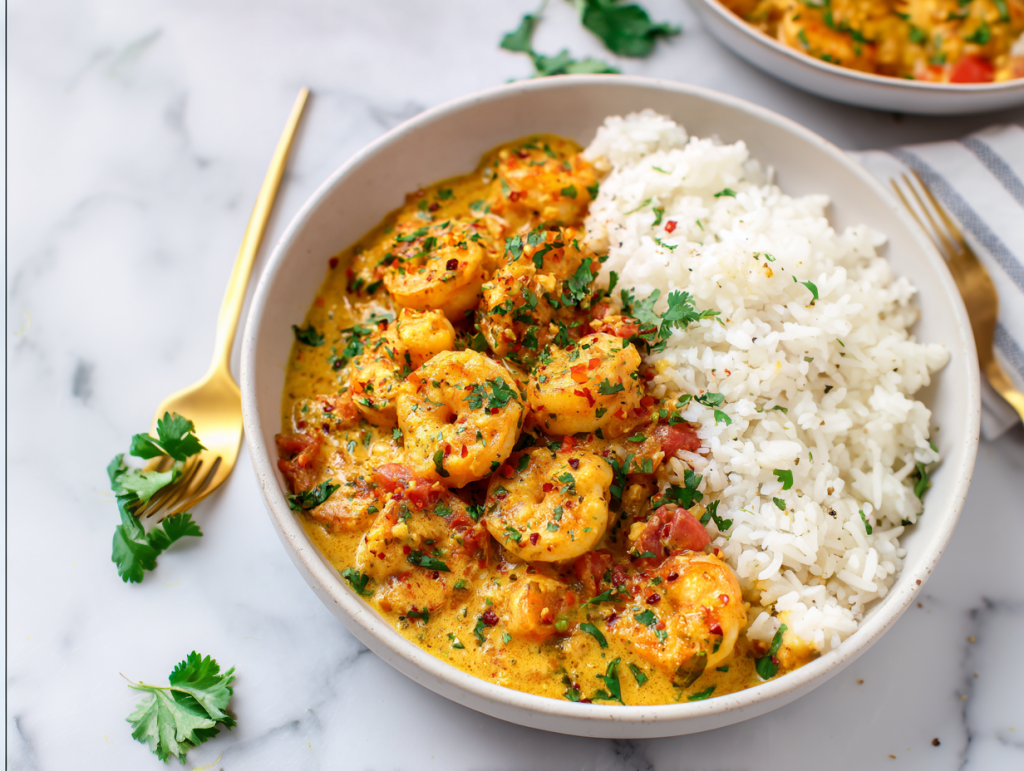
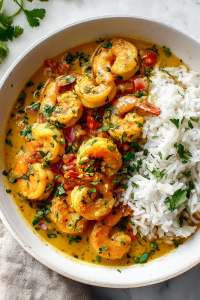
This one pan coconut curry shrimp is rich, creamy, and packed with warm aromatic flavor. Tender shrimp simmer in a smooth coconut curry sauce with tomatoes, ginger, and spices, creating a comforting meal that comes together quickly in just one skillet.
The sauce is creamy and lightly spiced with a balance of savory, slightly sweet, and warming flavors. Served with rice or naan, this dish feels cozy, satisfying, and perfect for busy weeknight dinners.
Why You’ll Love This Recipe
This recipe comes together in one pan with simple ingredients and minimal cleanup, making it perfect for quick meals without sacrificing flavor. The shrimp cook quickly while soaking up the rich coconut curry sauce for tender flavorful bites.
It is also easy to customize depending on your preferred spice level and works beautifully with rice, vegetables, or flatbread for a complete meal.
Ingredient Notes & Easy Substitutions
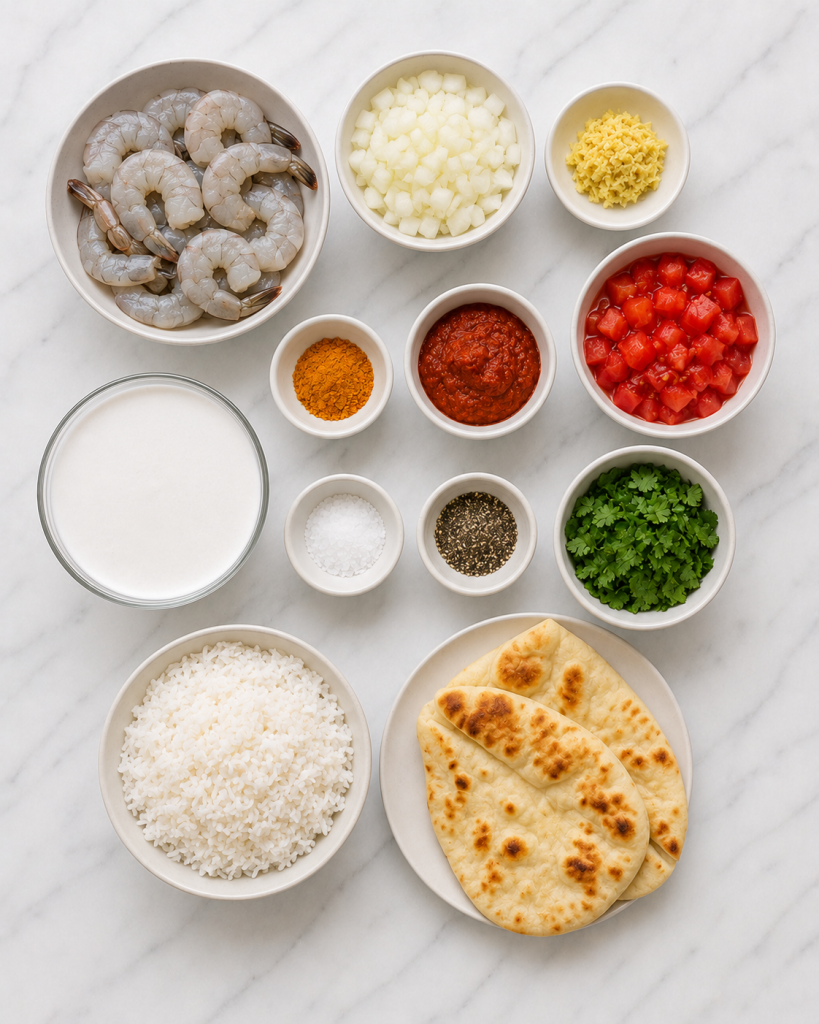
- Shrimp: Large raw shrimp cook quickly and stay tender in the creamy curry sauce.
- Coconut Milk: Full-fat coconut milk creates the richest and creamiest texture.
- Red Curry Paste: Adds bold curry flavor and gentle heat to the sauce.
- Ginger: Fresh ginger gives warm aromatic flavor and freshness.
- Diced Tomatoes: Balance the creamy coconut milk with light acidity.
- Ground Turmeric: Adds earthy flavor and vibrant golden color.

One Pan Coconut Curry Shrimp Recipe
Equipment
- A large skillet or frying pan
- A sharp knife (for chopping the onion and grating the ginger)
- A cutting board
- A spoon for stirring
- A small grater for ginger (optional but adds fresh zest)
Ingredients
- Heat a large skillet over medium heat and sauté the diced onion for 4–5 minutes until soft and translucent.
- Add the grated ginger ground turmeric, and red curry paste to the skillet. Stir well and cook for 1–2 minutes until fragrant.
- Pour in the diced tomatoes along with their juices and simmer for 5 minutes to allow the flavors to combine.
- Stir in the coconut milk and season with a pinch of salt and pepper. Mix until the sauce becomes smooth and creamy.
- Add the shrimp to the skillet and cook for 4–5 minutes stirring occasionally, until the shrimp turn pink and opaque.
- Let the curry simmer for another 2 minutes so the shrimp absorb the flavors of the sauce.
- Garnish with fresh cilantro if desired and serve warm with rice or naan.
Instructions
- Heat a large skillet over medium heat and sauté the diced onion for 4–5 minutes until soft and translucent.

- Add the grated ginger, ground turmeric, and red curry paste to the skillet. Stir well and cook for 1–2 minutes until fragrant.
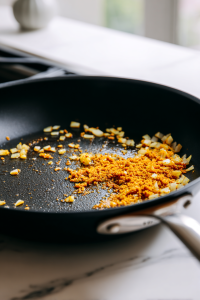
- Pour in the diced tomatoes along with their juices and simmer for 5 minutes to allow the flavors to combine.
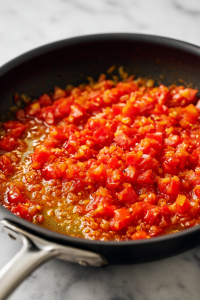
- Stir in the coconut milk and season with a pinch of salt and pepper. Mix until the sauce becomes smooth and creamy.
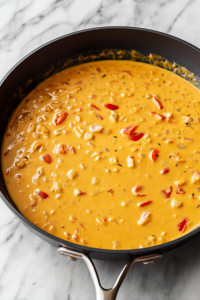
- Add the shrimp to the skillet and cook for 4–5 minutes, stirring occasionally, until the shrimp turn pink and opaque.

- Let the curry simmer for another 2 minutes so the shrimp absorb the flavors of the sauce.
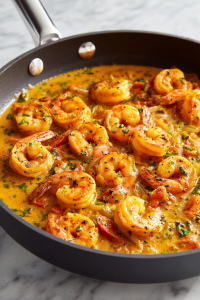
- Garnish with fresh cilantro if desired and serve warm with rice or naan.
Notes
- Use fresh shrimp for the best flavor, but thawed frozen shrimp work well for convenience.
Nutrition Facts (Approximate per serving)
| Nutrition | Value |
| Calories | 312kcal |
| Carbohydrates | 14g |
| Fibre | 3g |
| Fat | 25g |
| Protein | 11g |
| Cholesterol | 91g |
Common Mistakes & Quick Fixes
- Rubbery Shrimp: Avoid overcooking and remove from heat once the shrimp turn pink.
- Thin Curry Sauce: Simmer a few extra minutes to naturally thicken the sauce.
- Burnt Spices: Cook spices over medium heat while stirring frequently.
- Bland Flavor: Add extra curry paste, lime juice, or salt before serving.
- Split Coconut Milk: Keep the curry at a gentle simmer instead of boiling hard.
- Watery Curry: Use full-fat coconut milk for better consistency.
Make-Ahead and Storage Tips
- Store Rice Separately: Keeps the texture better during reheating.
- Refrigerator Storage: Store leftovers in an airtight container for up to 3 days.
- Reheat Gently: Warm slowly over low heat to keep the shrimp tender.
- Prep Ahead Option: Chop onions and grate ginger ahead for quicker cooking.
- Best Served Fresh: Shrimp taste best shortly after cooking.
Try Other Main Course Recipes Like This!
- Vegan Pasta Primavera
- 20 Minute Pasta With Vegetables
- Vegan Rainbow Peanut Noodles
- Vegan One Pot Creamy Garlic Brussels Sprouts Pasta
- Best Vegan Mushroom Stroganoff
Delicious Variations and Serving Ideas
- Spicy Version: Add extra curry paste or red pepper flakes for more heat.
- Veggie Addition: Add spinach, bell peppers, or peas for extra texture.
- Seafood Twist: Replace shrimp with scallops or salmon chunks.
- Rice Bowl Style: Serve over jasmine or basmati rice.
- Lime Finish: Add fresh lime juice before serving for brighter flavor.
- Naan Pairing: Serve with warm naan bread for dipping.
FAQ’s
- What does coconut curry shrimp taste like?
It tastes creamy, savory, slightly spicy, and rich with warm curry flavor. - Can I use frozen shrimp?
Yes, thaw the shrimp completely and pat them dry before cooking. - Is this curry very spicy?
No, it has mild warmth, but you can easily adjust the spice level. - What type of coconut milk works best?
Full-fat coconut milk gives the creamiest texture and richest flavor. - Can I make this recipe dairy-free?
Yes, the recipe is naturally dairy-free. - What can I serve with coconut curry shrimp?
Rice, naan, quinoa, or roasted vegetables pair very well. - Why is my shrimp rubbery?
Shrimp become tough when overcooked, so cook only until pink and opaque. - Can I add vegetables to the curry?
Yes, spinach, peppers, peas, and carrots all work nicely. - Can kids enjoy this recipe?
Yes, simply reduce the curry paste for a milder flavor. - How do I thicken the curry sauce?
Simmer uncovered for a few extra minutes until slightly reduced.