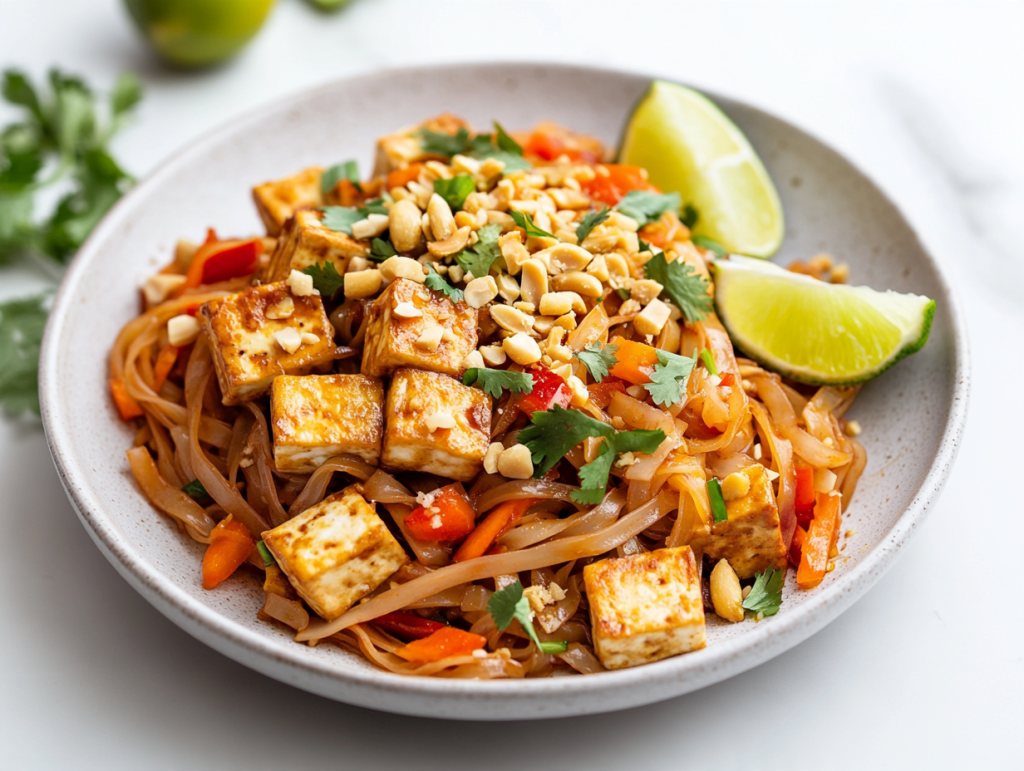
If you enjoy the sweet, tangy, and savory flavors of Thai-inspired noodles, this Vegetarian Pad Thai is a delicious dish to make at home. Flat rice noodles are tossed in a flavorful tamarind and lime sauce with golden tofu, crisp vegetables, and fresh bean sprouts.
This homemade Pad Thai comes together in just 35 minutes, making it a great option for a quick lunch or weeknight dinner. The sauce coats the noodles beautifully, and you can easily adjust the sweetness, tanginess, and chili heat to suit your taste.
Why You’ll Love This Recipe
- A Balanced Homemade Sauce: Tamarind, lime juice, soy sauce, and brown sugar create the signature combination of tangy, sweet, and savory flavors.
- Golden, Satisfying Tofu: Pan-fried tofu adds a hearty texture and absorbs the delicious sauce without needing deep-frying.
- Plenty of Fresh Texture: Crunchy bean sprouts, carrots, bell peppers, and roasted peanuts keep every bite interesting.
- Ready in 35 Minutes: The noodles and sauce cook quickly, making this a practical alternative to ordering takeout.
- Easy to Adjust: You can change the chili flakes, vegetables, and sauce seasoning to match your preferred flavor.
Ingredient Substitutions
- Rice Noodles: Flat rice noodles are ideal, but other medium-width rice noodles can work.
- Tamarind Paste: Tamarind concentrate can be used, but it may be stronger. Start with a smaller amount and adjust the sauce after tasting.
- Soy Sauce: Use gluten-free tamari for a gluten-free alternative. Check the other packaged ingredients as well, particularly the noodles and vegetarian fish sauce.
- Vegetarian Fish Sauce: Replace it with additional soy sauce or a vegetarian-certified fish sauce alternative. The flavor will vary slightly depending on the product.
- Tofu: Extra-firm tofu works best for browning, but firm tofu is also suitable. Press it well to remove excess moisture.
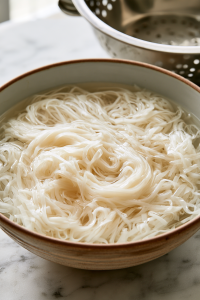
Chef’s TipDon’t wait until the rice noodles are completely soft before draining them. Keep them slightly firm after soaking so they can finish cooking in the wok while absorbing the tamarind sauce without turning mushy.
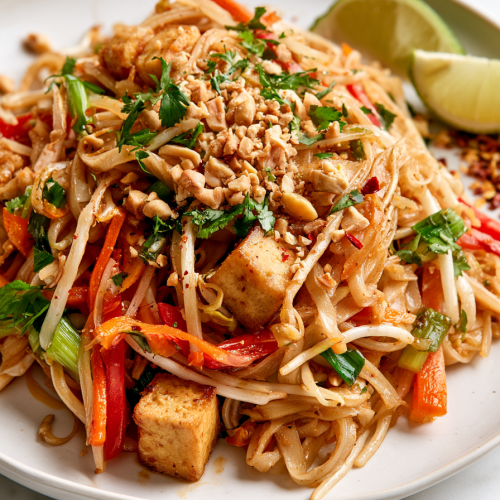
Vegetarian Pad Thai Recipe
Equipment
- Large wok or wide skillet
- Large bowl
- Small mixing bowl
- Whisk
- Colander
- Cutting board
- Sharp knife
- Spatula or tongs
Ingredients
- For the Noodles
- 8 ounces dried flat rice noodles
- Warm water for soaking
- For the Pad Thai Sauce
- 3 tablespoons tamarind paste
- 2 tablespoons soy sauce
- 2 tablespoons brown sugar
- 1 tablespoon vegetarian fish sauce or additional soy sauce
- 1 tablespoon fresh lime juice
- 1/2 teaspoon chili flakes adjust to taste
- For the Stir-Fry
- 2 tablespoons vegetable oil divided
- 8 ounces extra-firm tofu pressed and cubed
- 2 cloves garlic minced
- 1 medium carrot julienned
- 2 green onions cut into 2-inch pieces
- 2 cups fresh bean sprouts
- 1/2 cup chopped red bell pepper
- 1/4 cup chopped roasted peanuts
- For Serving
- 1 lime cut into wedges
- 2 tablespoons chopped fresh cilantro
- Extra crushed peanuts
- Additional chili flakes optional
Instructions
- Place the rice noodles in a large bowl and cover with warm water. Soak according to the package instructions until flexible but still slightly firm. Drain thoroughly and set aside. Avoid using boiling water, which can make the noodles too soft before stir-frying.
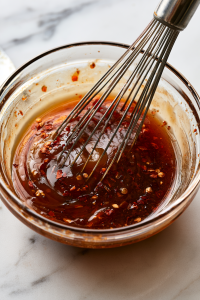
- In a small bowl, whisk together the tamarind paste, soy sauce, brown sugar, vegetarian fish sauce, lime juice, and chili flakes. Stir until the sugar dissolves and the sauce is well combined. Taste and adjust the sweetness or tanginess as desired.
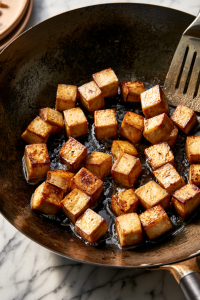
- Heat 1 tablespoon of vegetable oil in a large wok over medium-high heat. Add the cubed tofu in a single layer and cook for 5–6 minutes, turning occasionally, until golden on several sides. Transfer to a plate.
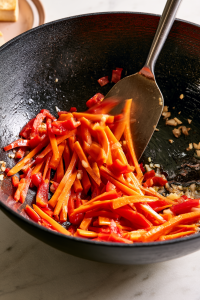
- Add the remaining tablespoon of oil to the wok. Stir in the minced garlic and cook for about 30 seconds. Add the carrot and red bell pepper, then stir-fry for 2 minutes until slightly tender but still crisp.
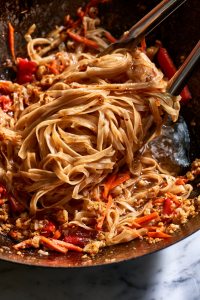
- Add the drained rice noodles to the wok along with the prepared sauce. Toss gently with tongs for 2–3 minutes, allowing the noodles to absorb the sauce. If the noodles are too firm, add a tablespoon or two of water and continue cooking until tender.
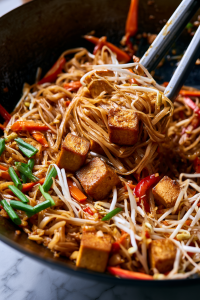
- Return the cooked tofu to the wok. Add the green onions and half of the bean sprouts. Toss everything together for another 1–2 minutes until heated through.
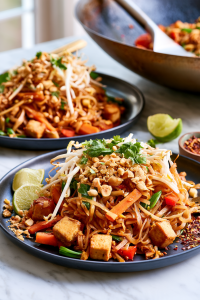
- Remove the wok from the heat. Divide the noodles among serving plates and top with the remaining bean sprouts, chopped peanuts, and fresh cilantro. Serve immediately with lime wedges and extra chili flakes on the side.
Nutrition Information
| Nutrient | Amount |
|---|---|
| Calories | 420 kcal |
| Carbohydrates | 59g |
| Protein | 16g |
| Fat | 14g |
| Fiber | 4g |
| Sugar | 12g |
| Sodium | 850mg |
Cooking Tips
- Prepare the Sauce Before Heating the Wok: Whisk all the sauce ingredients together first. Stir-frying moves quickly, so having the sauce ready makes cooking easier.
- Keep the Noodles Slightly Firm: They continue cooking when tossed with the hot sauce. Draining them while still a little firm helps prevent a soft, sticky result.
- Brown the Tofu in a Single Layer: Give the cubes enough space to develop golden edges. Turn them occasionally rather than stirring constantly.
- Use Medium-High Heat: A properly heated wok helps cook the vegetables quickly while keeping them crisp.
- Adjust the Sauce Before Serving: Taste a small portion and add extra lime juice for tanginess, sugar for sweetness, or chili flakes for more heat.
Try More Asian-Inspired Recipes
- Vegetable Chow Mein Recipe
- Vegetarian Lo Mein Recipe
- Vegetable Fried Rice Recipe
- Herb Roasted Potatoes Recipe
- Asian Vegetable Stir Fry Recipe
Frequently Asked Questions
1. Is Pad Thai traditionally vegetarian?
Traditional Pad Thai often includes fish sauce and sometimes dried shrimp. This version uses vegetarian fish sauce or additional soy sauce and tofu.
2. What type of noodles should I use for Vegetarian Pad Thai?
Flat rice noodles are the best choice for this recipe. They have a pleasant chewy texture and absorb the tamarind sauce well.
3. Can I make Vegetarian Pad Thai vegan?
Yes. Use vegan-certified rice noodles, tofu, and a vegetarian fish sauce alternative or soy sauce. Check the labels of all packaged ingredients to make sure they contain no animal-derived products.
4. Why are my Pad Thai noodles sticky?
Noodles can become sticky if they are soaked too long or overcooked. Drain them while slightly firm, and toss them gently in the wok with the sauce.
5. Can I make Pad Thai without tamarind paste?
Tamarind provides the characteristic tangy flavor. If you cannot find it, a combination of lime juice and a little rice vinegar can provide some acidity, although the flavor will not be quite the same.
6. How do I make the sauce sweeter or tangier?
Add a little more brown sugar for sweetness or extra lime juice for tanginess. Make small adjustments and taste as you go.
7. Can I use a regular skillet instead of a wok?
Absolutely. A large, wide skillet works well as long as it has enough room for tossing the noodles and vegetables without overcrowding.