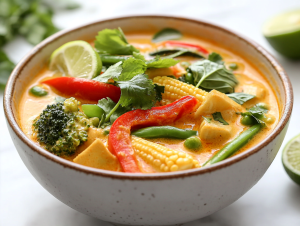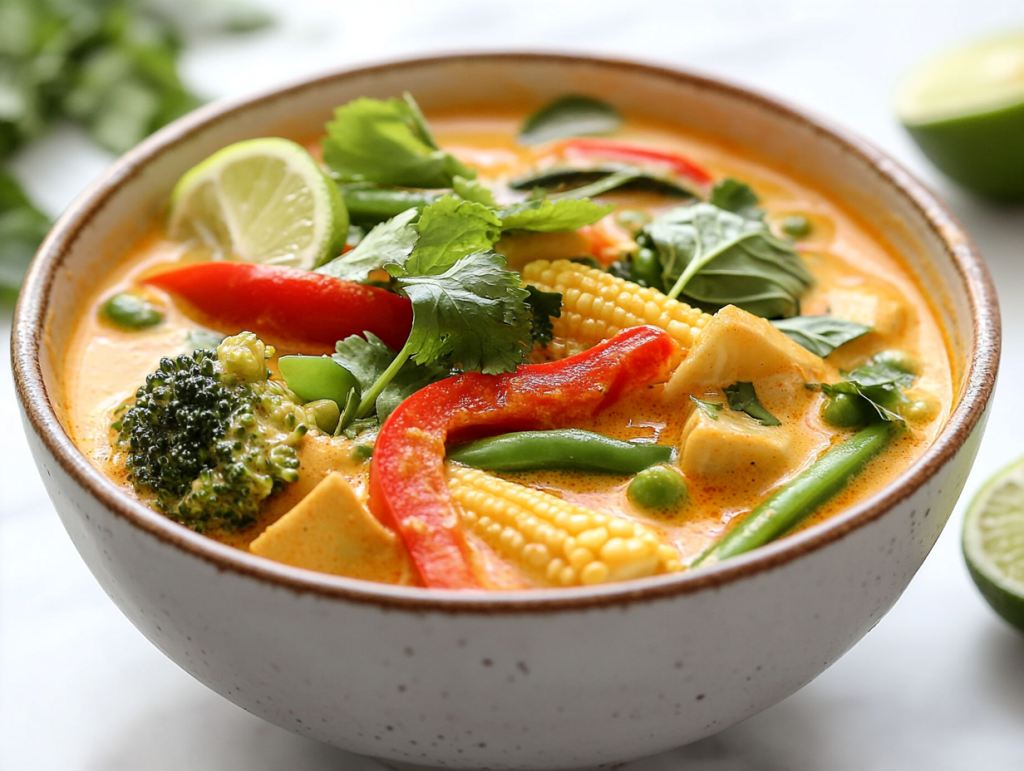
This Thai Vegetable Curry is a delicious way to turn everyday vegetables into a rich, satisfying meal. Colorful bell peppers, broccoli, carrots, snap peas, zucchini, and baby corn simmer in a creamy coconut milk sauce flavored with Thai red curry paste, fresh ginger, and garlic.
Ready in just 40 minutes, this homemade curry is perfect for busy weeknight dinners when you want something comforting with plenty of flavor. Serve it over steamed jasmine rice to soak up the creamy sauce, or pair it with your favorite noodles for a satisfying meat-free meal.
Why You’ll Love This Recipe
- A Rich Coconut Curry Sauce: Full-fat coconut milk creates a smooth, creamy base that carries the aromatic flavors of red curry paste, ginger, and garlic.
- A Colorful Mix of Vegetables: Broccoli, snap peas, carrots, peppers, zucchini, and baby corn bring different textures and natural sweetness to every serving.
- Easy to Adjust the Heat: You can start with less red curry paste for a milder sauce or add more if you enjoy a spicier curry.
- A Convenient One-Pan Meal: Everything comes together in one skillet or Dutch oven, making preparation and cleanup easier.
- Perfect for Rice or Noodles: The creamy sauce pairs beautifully with jasmine rice, but it also works well with rice noodles or other favorite sides.
Ingredient Substitutions for Different Needs
- Coconut Milk: Light coconut milk can replace full-fat coconut milk if you prefer a thinner, lighter sauce. The curry will be less creamy.
- Thai Red Curry Paste: Green curry paste can be used for a different flavor profile. Adjust the quantity according to its heat level.
- Soy Sauce: Use gluten-free tamari or coconut aminos as an alternative. Check the curry paste label as well if you need a gluten-free dish.
- Broccoli: Cauliflower florets or green beans can replace broccoli. Add them early enough to become tender.
- Snap Peas: Snow peas or sliced green beans work well if snap peas are unavailable.
Chef’s TipDon’t add all the vegetables at once. Give the carrots, broccoli, and baby corn a head start, then add the bell peppers, zucchini, and snap peas later. This simple timing keeps the vegetables tender while preserving their individual textures.
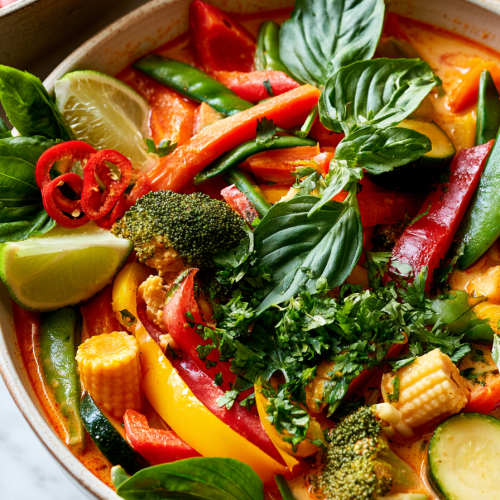
Thai Vegetable Curry Recipe
Equipment
- Large skillet (or Dutch oven)
- Cutting board
- Sharp knife
- Wooden spoon
- Measuring cups and spoons
- Small bowl
- Citrus juicer
Ingredients
For the Curry
- 1 tablespoon coconut oil
- 3 tablespoons Thai red curry paste
- 3 cloves garlic minced
- 1 tablespoon freshly grated ginger
- 1 small yellow onion sliced
- 1 can 13.5 ounces full-fat coconut milk
- 1/2 cup vegetable broth
- 1 tablespoon soy sauce
- 1 teaspoon brown sugar
- 1 tablespoon fresh lime juice
For the Vegetables
- 1 medium red bell pepper sliced
- 1 medium yellow bell pepper sliced
- 1 medium carrot thinly sliced
- 1 cup broccoli florets
- 1 cup snap peas
- 1 cup sliced zucchini
- 1/2 cup baby corn halved lengthwise
For Garnish
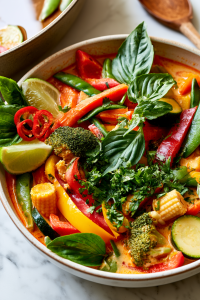
- 1/4 cup fresh Thai basil or regular basil leaves
- 2 tablespoons chopped fresh cilantro
- 1 lime cut into wedges
- 1 tablespoon sliced red chili optional
Instructions
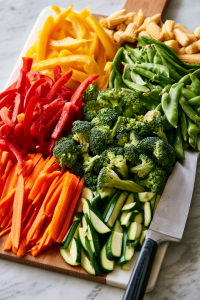
- Wash and dry all the vegetables. Slice the bell peppers, carrot, and zucchini, trim the snap peas, and cut the broccoli into bite-sized florets. Keep everything ready before heating the pan.
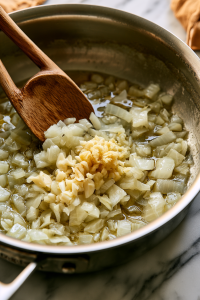
- Heat the coconut oil in a large skillet or Dutch oven over medium heat. Add the sliced onion and cook for 2–3 minutes until softened. Stir in the garlic and ginger and cook for another 30 seconds until fragrant.
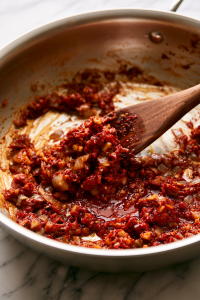
- Add the Thai red curry paste to the pan. Stir continuously for 1–2 minutes, allowing it to cook in the coconut oil and release its aroma. This step helps develop a deeper curry flavor.
- Pour in the coconut milk and vegetable broth. Stir until the curry paste is evenly incorporated. Add the soy sauce and brown sugar, then bring the mixture to a gentle simmer.

- Add the carrot, broccoli, and baby corn to the simmering sauce. Cover partially and cook for 4–5 minutes until they begin to soften.
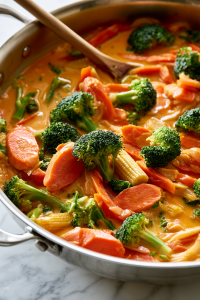
- Stir in the bell peppers, zucchini, and snap peas. Simmer uncovered for another 5–7 minutes, stirring occasionally, until the vegetables are tender but still retain some bite.
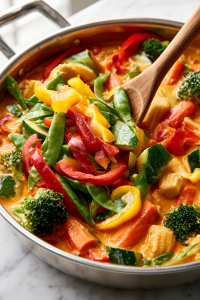
- Stir in the fresh lime juice. Taste the sauce and adjust the seasoning with additional soy sauce, lime juice, or brown sugar as needed. If the curry is too thick, add a little vegetable broth.
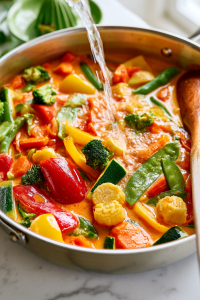
- Remove the pan from the heat. Stir in the Thai basil and chopped cilantro. Serve hot over steamed jasmine rice, with lime wedges and sliced red chili on the side.
Notes
- Adjust the spice level: Start with 2 tablespoons of curry paste for a milder curry. Add more gradually if you prefer extra heat.
- Use full-fat coconut milk: It creates a richer, creamier sauce. Light coconut milk works too, but the curry will be thinner.
- Customize the vegetables: Mushrooms, eggplant, green beans, baby spinach, or bamboo shoots are delicious additions. Add quick-cooking vegetables near the end.
- Add plant-based protein: Include crispy tofu, chickpeas, or edamame to make the curry more filling.
- Storage: Refrigerate leftovers in an airtight container for up to 3–4 days. Reheat gently on the stovetop, adding a splash of broth if the sauce has thickened.
Nutrition Information
Estimated nutrition per serving. Calories are based on the recipe information provided; other values are approximate.
| Nutrient | Amount |
|---|---|
| Calories | 320 kcal |
| Carbohydrates | 24g |
| Protein | 6g |
| Fat | 23g |
| Fiber | 6g |
| Sugar | 10g |
| Sodium | 720mg |
Delicious Variations You Should Not Miss
- Thai Vegetable Tofu Curry: Add cubes of crispy or pan-fried tofu for extra protein and a more filling dinner.
- Thai Chickpea Curry: Stir in drained chickpeas for a hearty variation with a creamy, satisfying texture.
- Spicy Thai Red Curry: Add extra red curry paste or sliced fresh red chili for a bolder, hotter sauce.
- Thai Eggplant Curry: Replace some of the zucchini with diced eggplant. Let it simmer until tender and able to absorb the coconut sauce.
- Thai Mushroom Curry: Add sliced shiitake, cremini, or oyster mushrooms for a deeper earthy flavor.
Try More Asian-Inspired Recipes
- Vegetarian Pad Thai Recipe
- Vegetable Teriyaki Stir Fry Recipe
- Vegetarian Miso Soup Recipe
- Vegetable Spring Rolls Recipe
Frequently Asked Questions
1. Is Thai Vegetable Curry vegetarian?
Yes. This recipe uses vegetables, coconut milk, and vegetable broth instead of meat or seafood. Check the Thai red curry paste label to make sure it doesn’t contain shrimp paste or other animal-derived ingredients.
2. Can I make Thai Vegetable Curry vegan?
Yes. Use a vegan-certified red curry paste and soy sauce, and check that the vegetable broth contains no animal-derived ingredients. The remaining ingredients are plant-based.
3. What vegetables work best in Thai Vegetable Curry?
Bell peppers, broccoli, carrots, snap peas, zucchini, and baby corn are excellent choices. You can also add mushrooms, eggplant, green beans, spinach, or bamboo shoots.
4. Can I use light coconut milk instead of full-fat coconut milk?
Yes. Light coconut milk works, but the sauce will be thinner and less creamy. Full-fat coconut milk gives the curry its richer texture.
5. How spicy is Thai Vegetable Curry?
The heat depends on the red curry paste you use and how much you add. Start with 2 tablespoons for a milder curry and gradually increase it to suit your preference.
6. What can I serve with Thai Vegetable Curry?
Steamed jasmine rice is a classic pairing because it absorbs the creamy sauce beautifully. You can also serve it with brown rice, rice noodles, or another favorite grain.
7. Can I add tofu or chickpeas to this curry?
Absolutely. Crispy tofu, pan-fried tofu, chickpeas, and edamame all make delicious additions. Add cooked tofu near the end or simmer chickpeas with the vegetables until heated through.