Quick Caramelized Onions are an easy way to add sweet, savory flavor to everyday meals without spending nearly an hour at the stove. Thinly sliced yellow onions cook in butter and olive oil until soft and golden, creating a versatile topping for burgers, sandwiches, pizzas, and other savory dishes.
This quicker method uses a wide skillet, evenly sliced onions, and small splashes of water to help the onions soften and brown in about 25 minutes. A little balsamic vinegar adds optional tanginess, while a touch of sugar can enhance the sweetness if desired.
Why These Quick Caramelized Onions Are Worth Making
- Faster than the traditional method: Thin slices and a wide skillet help the onions cook in approximately 20 minutes.
- Made with everyday ingredients: Onions, butter, olive oil, salt, and pepper form the basic recipe.
- Useful for many meals: Add them to burgers, sandwiches, pizzas, pasta, grain bowls, or savory breakfast dishes.
- Easy to adjust: Balsamic vinegar and sugar are optional, so you can tailor the final flavor to your meal.
- Beginner-friendly technique: The recipe relies on gentle cooking, regular stirring, and small additions of water.
Ingredients That Make a Difference
- Yellow onions: Their balanced flavor and natural sugars make them a dependable choice for caramelizing. Sweet onions also work, while red onions produce a slightly different flavor and color.
- Unsalted butter: Butter adds richness and helps develop the savory flavor of the onions as they soften and brown.
- Olive oil: Combining oil with butter helps distribute the fat throughout the skillet and reduces the risk of the butter browning too quickly.
- Salt and black pepper: Salt seasons the onions and helps draw out moisture, while black pepper adds a gentle savory note.
- Water: Small splashes of water loosen browned bits from the skillet and help prevent the onions from sticking or burning before they soften.
Chef’s Tip: Use a wide skillet and keep the onions moving regularly once they begin to brown. If the bottom of the pan develops dark spots too quickly, add a tablespoon of water and scrape up the browned bits before continuing.

Quick Caramelized Onions Recipe
Equipment
- Large skillet
- Sharp knife
- Cutting board
- Wooden spoon or spatula
- Measuring spoons
Ingredients
- 3 large yellow onions thinly sliced
- 1 tablespoon unsalted butter
- 1 tablespoon olive oil
- 1/2 teaspoon salt
- 1/4 teaspoon freshly ground black pepper
- 2 tablespoons water plus more as needed
- 1 teaspoon balsamic vinegar optional
- 1/2 teaspoon granulated sugar optional
Instructions
- Peel the onions and cut them in half from root to tip. Place each half cut-side down on a cutting board and slice it into thin, even strips. Keeping the slices similar in thickness helps them cook evenly.

- Place a large skillet over medium heat. Add the butter and olive oil, allowing the butter to melt completely. The combination of butter and oil adds flavor while helping prevent the butter from browning too quickly.

- Add the sliced onions to the skillet and sprinkle with salt and black pepper. Stir to coat them evenly in the fat. Cook for 5 to 7 minutes, stirring frequently, until the onions soften and begin to release moisture.

- Reduce the heat to medium-low and continue cooking for another 10 to 15 minutes, stirring regularly. If the onions begin sticking to the skillet or browning too quickly, add a tablespoon of water and scrape up the browned bits from the bottom. Repeat with small splashes of water as needed.

- When the onions are soft and golden brown, stir in the balsamic vinegar if desired. For a slightly sweeter result, add the optional sugar during the final few minutes of cooking. Continue stirring until the liquid evaporates and the onions are glossy and tender.
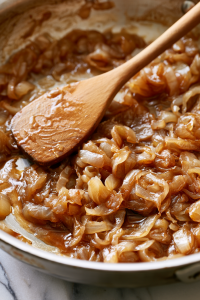
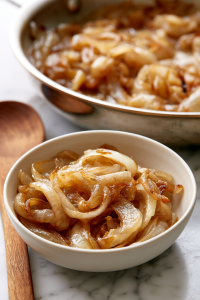
- Remove the skillet from the heat and let the onions cool slightly. Serve warm as a topping or condiment, or transfer them to an airtight container for later use.
Notes
- Choose yellow onions: They have a balanced flavor and become naturally sweet as they cook. Sweet onions also work well, while red onions provide a slightly different flavor.
- Slice evenly: Thin, uniform slices cook faster and more consistently than thick or uneven pieces.
- Use a wide skillet: A larger cooking surface allows moisture to evaporate more quickly and encourages browning.
- Avoid excessive heat: High heat may burn the outside before the onions soften. Keep the temperature at medium-low once the onions have released their moisture.
- Sugar is optional: Onions contain natural sugars, so extra sugar is not necessary. Add a small amount only if you prefer a sweeter finish.
Nutrition Information
| Nutrient | Amount per serving |
|---|---|
| Calories | 105 kcal |
| Carbohydrates | 14 g |
| Protein | 2 g |
| Fat | 5 g |
| Fiber | 3 g |
| Sugar | 7 g |
| Sodium | 300 mg |
Variations to Try
- Balsamic Caramelized Onions: Stir in the optional balsamic vinegar near the end for a tangy finish that works well with burgers and sandwiches.
- Sweeter Caramelized Onions: Add the optional granulated sugar during the final few minutes for a more pronounced sweetness.
- Garlic Caramelized Onions: Add a small amount of minced garlic near the end of cooking to prevent it from burning.
- Herb-Infused Onions: Stir in fresh thyme leaves during the last few minutes for an earthy, aromatic variation.
- Red Onion Version: Replace the yellow onions with red onions for a deeper color and a slightly different flavor.
Recipes to Try Next
- Brown Butter Mashed Sweet Potatoes Recipe
- Garlic Butter Shrimp and Broccoli Skillet Recipe
- Classic Homemade Irish Soda Bread
- Crockpot Ham Recipe
- Knorr Spinach Dip Recipe
Frequently Asked Questions
- What is the difference between softened onions and caramelized onions
Softened onions become tender and translucent, while caramelized onions cook longer and develop golden-brown color and a sweeter, deeper flavor as their natural sugars brown. - Can I caramelize onions in a nonstick skillet?
Yes. A wide nonstick skillet works well. You may need to pay attention to the browning because the development of browned bits can differ from that in stainless steel or cast-iron cookware. - Why do onions shrink so much during cooking?
Onions contain a large amount of water. As they cook, moisture evaporates and the slices become smaller and more concentrated in flavor. - Do I need to add sugar to caramelized onions?
No. Onions contain natural sugars that become more noticeable during cooking. The optional sugar is only for people who prefer a sweeter result. - Can I caramelize onions without butter?
Yes. Use olive oil instead of butter. The onions will still soften and brown, although the finished flavor will be slightly different. - How can I tell when the onions are finished?
They should be soft, glossy, and golden brown, with a concentrated sweet-savory flavor. This quicker method may produce a lighter color than onions cooked slowly for 45 minutes or longer. - What type of pan is best for caramelizing onions?
A wide skillet is helpful because it spreads the onions across a larger cooking surface, allowing moisture to evaporate and the onions to brown more efficiently.