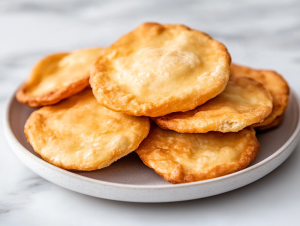
Navajo Fry Bread is a simple fried bread made with all-purpose flour, baking powder, salt, and water. The dough is shaped into flat rounds and fried until golden, creating a lightly crisp exterior with a soft, chewy center. Made without yeast, this bread uses basic ingredients and a straightforward preparation method.
This homemade fry bread can be served warm with honey, powdered sugar, or cinnamon sugar, or used as the base for Navajo tacos topped with seasoned meat, beans, lettuce, tomatoes, and cheese. The dough needs a short resting period before shaping, but no lengthy rise.
Why This Navajo Fry Bread Recipe Is Worth Making
- Simple ingredients: The dough uses everyday pantry staples without requiring yeast or specialty flour.
- Straightforward preparation: Mixing, kneading, resting, and shaping are manageable steps for home cooks.
- Flexible serving options: The bread works with both sweet toppings and savory taco-style fillings.
- Convenient portions: Dividing the dough into eight rounds makes it easy to serve a group.
- Easy to customize: Adjust the size and thickness of the rounds to suit your meal.
- Useful for different occasions: Serve it alongside dinner, prepare it for a casual gathering, or offer it as a sweet treat.
Ingredients for Navajo Fry Bread
- All-purpose flour: Provides the structure for the dough. Measure it carefully to avoid adding too much, which can make the bread dense.
- Baking powder: Helps the dough puff during frying and contributes to a lighter interior.
- Salt: Balances the flavor and keeps the bread from tasting flat.
- Warm water: Hydrates the flour and brings the dough together. Add it gradually because flour can absorb different amounts of liquid.
- Vegetable oil in the dough: Adds a little richness and helps make the dough easier to handle.
Chef’s Tip: Keep the frying oil close to 350°F (175°C). If the oil is too hot, the bread can brown before the center cooks; if it is too cool, the dough may absorb excess oil.
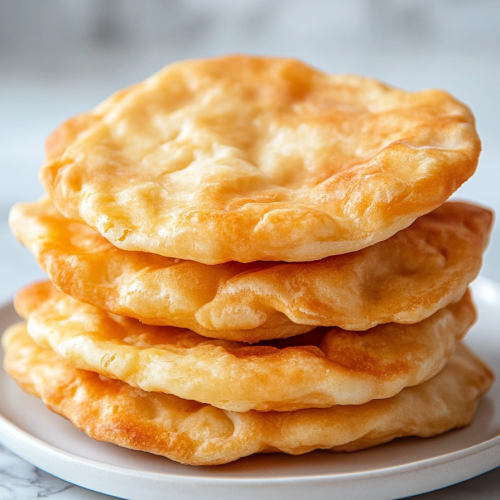
Navajo Fry Bread Recipe
Equipment
- Large mixing bowl
- Measuring cups and spoons
- Wooden spoon or spatula
- Clean kitchen towel
- Rolling pin (optional)
- Heavy-bottomed skillet or Dutch oven
- Cooking thermometer (optional)
- Slotted spoon or tongs
- Paper towels
- Wire rack
Ingredients
- 3 cups all-purpose flour
- 1 tablespoon baking powder
- 1 teaspoon salt
- 1¼ cups warm water added gradually
- 2 tablespoons vegetable oil for the dough
- Vegetable oil for frying
Instructions
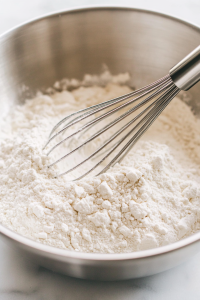
- In a large mixing bowl, combine the all-purpose flour, baking powder, and salt. Whisk thoroughly to distribute the baking powder evenly throughout the flour. This helps the bread puff and develop a tender texture as it fries.
- Pour in about 1 cup of warm water and the 2 tablespoons of vegetable oil. Stir with a wooden spoon until a rough dough begins to form. Gradually add the remaining water as needed until the dough comes together. It should be soft and slightly tacky, not wet or overly sticky.

- Transfer the dough to a lightly floured surface. Knead gently for about 2–3 minutes, just until it becomes smoother. Avoid adding too much extra flour, as a stiff dough can produce dense fry bread.

- Return the dough to the bowl and cover it with a clean kitchen towel. Let it rest for 30 minutes at room temperature. This allows the flour to absorb the moisture and makes the dough easier to shape.

- Divide the dough into 8 equal portions and roll each into a ball. Flatten each ball with your hands or a rolling pin into a round about 6–7 inches wide and approximately ¼ inch thick. Keep the rounds covered while shaping the remaining dough to prevent them from drying out. Make a small hole in the center of each round if desired to help it cook evenly.

- Pour vegetable oil into a heavy-bottomed skillet or Dutch oven to a depth of about 1–2 inches. Heat over medium heat until the oil reaches approximately 350°F (175°C). If you do not have a thermometer, test with a small piece of dough; it should bubble steadily when added without browning immediately.

- Carefully place one dough round into the hot oil. Fry for about 1–2 minutes on the first side, until puffed and golden underneath. Turn with tongs and fry the other side for another 1–2 minutes. Adjust the heat as needed to keep the oil temperature steady, and fry in batches without overcrowding the pan.

- Transfer the cooked fry bread to a wire rack or a paper towel-lined plate to drain excess oil. Repeat with the remaining rounds, allowing the oil to return to temperature between batches. Serve warm with your preferred savory toppings or sweet additions.

Notes
Nutrition Information
| Nutrient | Amount per piece |
|---|---|
| Calories | 250 kcal |
| Carbohydrates | 38 g |
| Protein | 5 g |
| Fat | 8 g |
| Fiber | 1 g |
| Sugar | 1 g |
| Sodium | 390 mg |
Navajo Fry Bread Variations
- Honey-topped fry bread: Drizzle warm fry bread with honey just before serving.
- Cinnamon sugar fry bread: Sprinkle the bread with cinnamon sugar while it is still warm.
- Powdered sugar fry bread: Dust the surface lightly with powdered sugar for a simple sweet option.
- Savory herb bread: Add a small amount of dried herbs to the flour mixture for a savory variation.
- Navajo taco-style bread: Use each round as a base for seasoned meat or beans, lettuce, tomatoes, and cheese.
What to Serve with Navajo Fry Bread
- Keto Pita Bread Recipe
- Mexican Cornbread Muffins Recipe
- Baked Ziti with Ricotta and Mozzarella Recipe
- Hidden Valley Ranch Dip Recipe
- Hearty Lentil Vegetable Soup Recipe
Frequently Asked Questions
- What is Navajo fry bread made of?
This version uses all-purpose flour, baking powder, salt, warm water, and a small amount of vegetable oil in the dough. Additional oil is used to fry the shaped rounds. - Does Navajo fry bread contain yeast?
No. This recipe uses baking powder as its leavening agent, so the dough does not need a yeast-based rising period. - Why does the dough need to rest?
Resting gives the flour time to absorb the water and allows the dough to relax. This makes the rounds easier to flatten and shape without tearing or shrinking as much. - Do I need a rolling pin to shape the bread?
No. You can flatten each dough ball with your hands. A rolling pin is optional and can help create rounds with a more consistent thickness. - Why is a hole sometimes made in the center?
A small hole can help oil reach the center area and encourage more even cooking. It is optional, so you can leave the rounds intact if preferred. - Can I use a different oil for frying?
Yes. Choose a neutral oil suitable for frying at medium-high temperatures, such as canola or sunflower oil. Avoid oils with low smoke points. - How do I know when the oil is ready without a thermometer?
Add a tiny piece of dough to the oil. It should bubble steadily and begin cooking without immediately turning dark. A thermometer is more reliable, so use one if available.