Croissants are classic French pastries known for their golden, flaky layers and soft, buttery centers. Made with yeast-based dough and layers of cold butter, they develop their signature texture through lamination, a process of rolling and folding the dough to create delicate layers.
Homemade croissants require patience, but the process is manageable when the dough is kept cold and given enough time to rest and rise. These croissants bake into crisp, golden pastries with a tender, airy interior. Enjoy them for breakfast, serve them with coffee, or try sweet and savory fillings for a different take.
Why This Croissant Recipe Is Worth Making
- Traditional technique: The repeated folding process creates the delicate layers associated with classic croissants.
- Straightforward ingredients: Flour, yeast, milk, water, sugar, salt, and butter form the foundation of the dough.
- A rewarding baking project: The recipe walks through preparing the dough, laminating the butter, shaping, proofing, and baking.
- Flexible serving options: Croissants work for breakfast, brunch, snacks, or light meals.
- Useful for special occasions: Freshly baked pastries make a thoughtful addition to a weekend breakfast or brunch spread.
Ingredients That Create Flaky Croissants
- All-purpose or bread flour: Flour provides the structure for the dough. Weighing 500 g is the most reliable way to get the intended consistency.
- Granulated sugar: Sugar adds mild sweetness and supports browning during baking.
- Instant yeast: Yeast helps the dough rise and contributes to the light texture. Check that it is fresh for reliable results.
- Cold milk and water: These liquids bring the dough together. Keeping them cold helps prevent the dough from warming too much during mixing.
- Unsalted butter: Butter is essential to lamination. The 227 g butter layer should remain cold but pliable so it forms distinct layers instead of blending into the dough.
Chef’s Tip: Aim for the dough and butter to have a similar firmness before laminating. If one is much softer than the other, the butter may break apart or squeeze out instead of forming even layers.

Croissant Recipe
Equipment
- Large mixing bowl
- Measuring cups and spoons or kitchen scale
- Whisk
- Rolling pin
- Bench scraper or sharp knife
- Parchment paper
- Baking sheets
- Pastry brush
- Plastic wrap
- Wire cooling rack
Ingredients
For the Dough
- 4 cups 500 g all-purpose flour or bread flour
- 1/4 cup 50 g granulated sugar
- 2 1/4 teaspoons 7 g instant yeast
- 1 1/2 teaspoons salt
- 1 cup 240 ml cold whole milk
- 1/2 cup 120 ml cold water
- 2 tablespoons 28 g unsalted butter, softened
For the Butter Layer
- 1 cup 227 g unsalted butter, cold
For the Egg Wash
- 1 large egg
- 1 tablespoon milk
Instructions
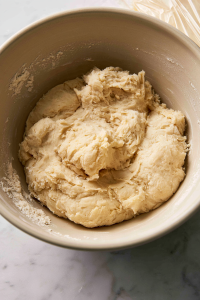
- In a large mixing bowl, whisk together the flour, sugar, instant yeast, and salt. Add the cold milk, cold water, and softened butter. Mix until a rough dough forms, then knead for about 5 to 8 minutes until smooth and elastic. The dough should feel firm but pliable. Shape it into a rectangle, wrap it tightly, and refrigerate for at least 1 hour.
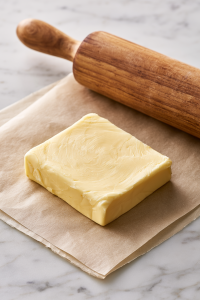
- Place the cold butter between two sheets of parchment paper. Use a rolling pin to pound and roll it into a square approximately 6 × 6 inches. Keep the butter cool but pliable so it can bend without breaking. Refrigerate it briefly if it becomes soft or greasy.
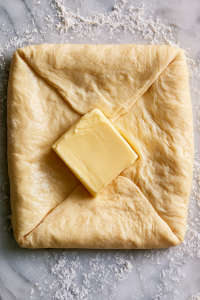
- Place the chilled dough on a lightly floured surface and roll it into a rectangle approximately 10 × 10 inches. Position the butter block diagonally in the center of the dough. Fold the corners of the dough over the butter so it is completely enclosed, pressing the seams together to seal.
- Roll the dough into a long rectangle approximately 8 × 24 inches, working gently so the butter remains evenly distributed. Fold the dough into thirds, like a letter. This completes the first fold. Wrap the dough and refrigerate for 30 to 45 minutes.
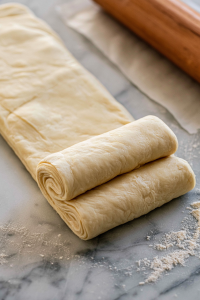
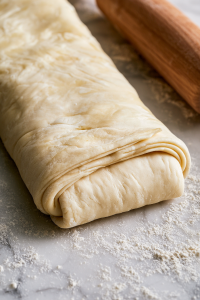
- Repeat the rolling and folding process two more times, chilling the dough between folds. If the dough resists rolling or the butter begins to soften, return it to the refrigerator before continuing. These folds create the thin layers that give croissants their flaky texture.
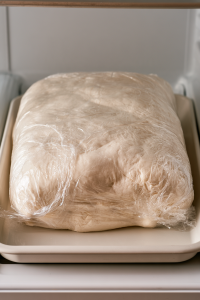
- After completing the folds, wrap the dough tightly and refrigerate it for at least 2 hours, preferably overnight. The dough should be cold and firm before shaping. This resting period also allows the gluten to relax, making the final rolling easier.
- Place the chilled dough on a lightly floured surface and roll it into a rectangle approximately 10 × 20 inches and about 1/8 inch thick. Trim the edges with a sharp knife to create neat sides. Cut the dough into 12 long triangles, each with a base of approximately 3 to 4 inches.

- Make a small cut in the center of each triangle’s wide base. Gently stretch the triangle lengthwise, then roll it from the base toward the tip without pressing too tightly. Curve the ends slightly inward to form the traditional crescent shape. Place each croissant on a parchment-lined baking sheet with the pointed tip tucked underneath.
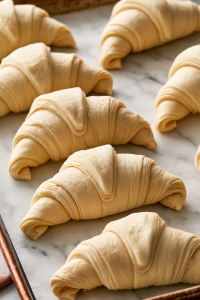
- Cover the shaped croissants loosely and let them rise in a warm, draft-free place for approximately 2 to 3 hours, depending on the room temperature. They should look noticeably larger, feel light, and wobble gently when the baking sheet is moved. Keep the environment moderate rather than hot, as excessive warmth can cause the butter to melt out of the dough.

- Whisk the egg and milk together in a small bowl. Gently brush a thin layer over the croissants, taking care not to let the egg wash pool around the edges or run down the cut sides, as this can interfere with the pastry layers.

- Preheat the oven to 400°F (200°C). Bake the croissants for 18 to 22 minutes, or until deeply golden brown, crisp on the outside, and fully baked through. If baking on two trays, rotate their positions halfway through if your oven heats unevenly.

- Transfer the croissants to a wire rack and allow them to cool for at least 10 to 15 minutes. Serve warm or at room temperature. The exterior should be crisp and flaky, with a tender, airy interior.

Notes
- Keep the butter cold: The butter and dough should have a similar firmness during lamination. If the butter becomes too soft, it can blend into the dough instead of forming distinct layers.
- Measure flour accurately: Weighing the flour is the most reliable method. Too much flour can make the dough stiff and the finished croissants dense.
- Do not rush the chilling: Resting the dough between folds makes it easier to roll and helps preserve the layers.
- Proof at a moderate temperature: A warm environment can melt the butter before baking. Allow enough time for the croissants to rise properly rather than increasing the heat.
- Look for proper proofing: Croissants should be puffy and visibly expanded before they go into the oven. Underproofed croissants may be dense, while overproofed ones can collapse.
Croissant Nutrition Information
| Nutrient | Amount per Croissant |
|---|---|
| Calories | 310 kcal |
| Carbohydrates | 39 g |
| Protein | 7 g |
| Fat | 14 g |
| Fiber | 2 g |
| Sugar | 5 g |
| Sodium | 350 mg |
Croissant Variations to Try
- Chocolate Croissants: Place a small piece of baking chocolate near the wide end of each triangle before rolling.
- Almond Croissants: Once baked and cooled, fill the pastries with almond cream and finish with sliced almonds if desired.
- Ham and Cheese Croissants: Add a modest amount of ham and cheese before shaping for a savory variation.
- Jam-Filled Croissants: Serve baked croissants with fruit jam or use a small amount of thick jam as a filling before rolling.
- Cheese Croissants: Add a little grated cheese to the dough triangle before shaping for a savory pastry.
Recipes to Try Next
- Brown Butter Mashed Sweet Potatoes Recipe
- Maple Roasted Delicata Squash with Sage
- Classic Homemade Irish Soda Bread
- Au Gratin Potatoes Recipe
- Banana Nut Bread Recipe
Frequently Asked Questions
- What is lamination in croissant making?
Lamination is the process of enclosing butter in dough and repeatedly rolling and folding the layers. - Why is instant yeast used in croissant dough?
Instant yeast helps the dough rise during proofing. It also contributes to the pastry’s structure and flavor as the dough develops. - Can all-purpose flour be used instead of bread flour?
Yes. Both are listed as options for this recipe. Bread flour generally has more protein, while all-purpose flour may produce a slightly more tender result. - Why are croissants shaped like crescents?
The crescent is a traditional croissant shape. Rolling the dough triangles from the wide base toward the tip creates the familiar curved pastry, though croissants can also be shaped with straighter ends. - What should properly proofed croissants look like?
They should be visibly larger, feel light, and wobble gently when the tray is moved. They should not look tight and compact or appear so fragile that they collapse easily. - Why should egg wash be kept away from the cut edges?
Excess egg wash can run down the sides and stick the delicate layers together. Brushing a thin coating over the surface helps encourage even browning without obstructing the layers. - Can croissant dough be rolled with a regular rolling pin?
Yes. A standard rolling pin works well. Roll evenly and gently, applying enough pressure to lengthen the dough without squeezing the butter out.