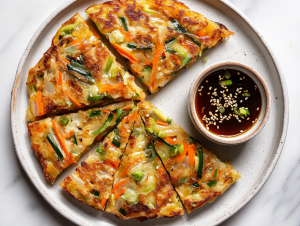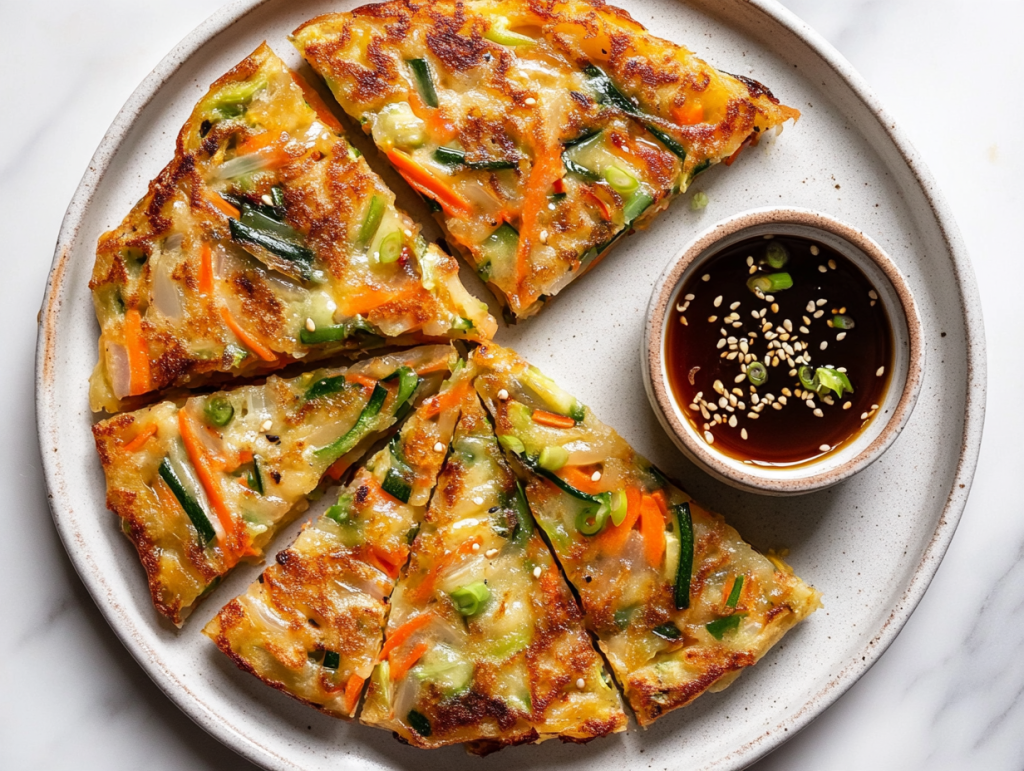
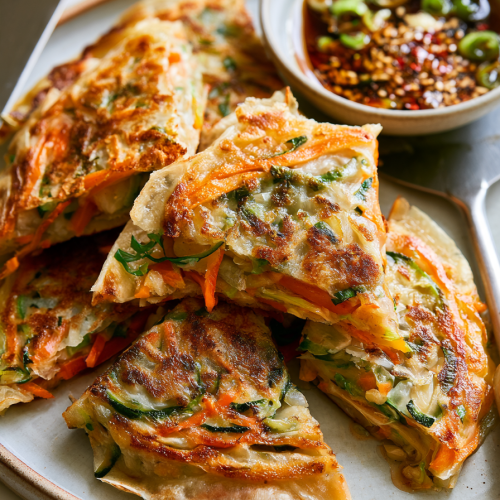
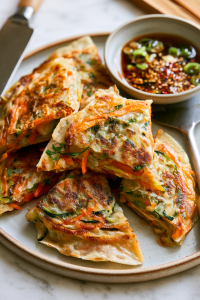
These Korean Vegetable Pancakes, also known as Yachaejeon, are a delicious way to use fresh vegetables in a simple, satisfying dish. A light batter made with flour, cornstarch, egg, and cold water brings together shredded cabbage, carrots, zucchini, bell peppers, and green onions.
What makes these pancakes especially enjoyable is their balance of textures and flavors. The vegetables add natural sweetness and freshness, while the soy-based dipping sauce brings a savory, tangy finish.
Why You’ll Love This Recipe
- A Colorful Mix of Fresh Vegetables: Cabbage, carrots, zucchini, bell peppers, and green onions bring different textures, colors, and natural flavors to every bite.
- Crispy Edges and Tender Centers: Cornstarch helps create a lightly crisp exterior while the vegetables stay pleasantly tender inside.
- A Simple Homemade Dipping Sauce: Soy sauce, rice vinegar, sesame oil, and a touch of sweetness make an easy sauce that complements the savory pancakes.
- A Flexible Meat-Free Dish: Enjoy them as an appetizer, snack, light meal, or side dish alongside rice and other Korean-inspired dishes.
- Ready in Just 35 Minutes: The batter comes together quickly, and the pancakes cook in a skillet without requiring complicated preparation.
Ingredient Substitutions for Different Needs
- Vegan Option: Skip the egg and add 2 tablespoons of water to the batter. Use maple syrup instead of honey in the dipping sauce.
- Different Vegetables: Thinly sliced mushrooms, spinach, bean sprouts, or shredded sweet potato can be used in place of some of the vegetables.
- Less Heat: Leave out the red pepper flakes in the dipping sauce for a milder flavor.
- More Heat: Add extra red pepper flakes or a little Korean gochugaru to the dipping sauce.
- Alternative Oil: Use avocado oil, canola oil, or another neutral cooking oil for frying.
Chef’s TipFor especially crisp Korean vegetable pancakes, spread the mixture thinly and let the first side cook undisturbed until deeply golden before flipping. Moving it too early can cause the vegetables to separate and make the pancake difficult to turn.
Korean Vegetable Pancakes Recipe
Equipment
- Large mixing bowl
- Whisk
- Cutting board and sharp knife
- Box grater or julienne peeler
- Large nonstick skillet
- Spatula
- Small bowl for dipping sauce
Ingredients
For the Vegetable Pancakes
- 1 cup all-purpose flour
- ¼ cup cornstarch
- ¾ cup cold water
- 1 large egg
- ½ teaspoon salt
- ¼ teaspoon ground black pepper
- 1 cup finely shredded green cabbage
- ½ cup julienned carrots
- ½ cup julienned zucchini
- ½ cup thinly sliced bell pepper
- 4 green onions cut into 2-inch pieces
- 2 tablespoons neutral cooking oil for frying
For the Dipping Sauce
- 3 tablespoons soy sauce
- 1 tablespoon rice vinegar
- 1 teaspoon sesame oil
- 1 teaspoon honey or maple syrup
- ½ teaspoon toasted sesame seeds
- 1 teaspoon finely sliced green onions
- ¼ teaspoon red pepper flakes optional
Instructions
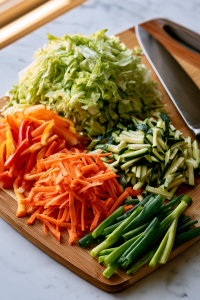
- Prepare the vegetables: Wash and dry the vegetables thoroughly. Shred the cabbage, julienne the carrots and zucchini, thinly slice the bell pepper, and cut the green onions into short lengths. Keep the pieces relatively thin so they cook quickly and distribute evenly throughout the pancakes.
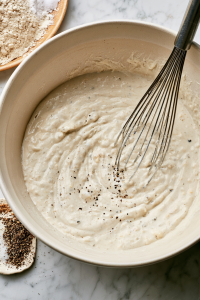
- Make the batter: In a large mixing bowl, whisk together the flour, cornstarch, cold water, egg, salt, and black pepper until just combined. A few small lumps are fine. Avoid overmixing, as this can make the pancakes dense.
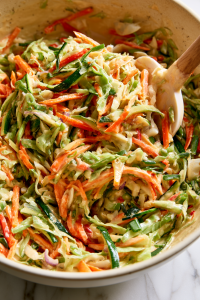
- Add the vegetables: Fold the cabbage, carrots, zucchini, bell pepper, and green onions into the batter. Stir until the vegetables are lightly coated. The mixture should look vegetable-heavy rather than overly liquid.
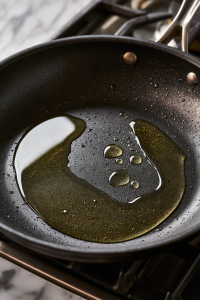
- Heat the skillet: Place a large nonstick skillet over medium heat and add about ½ tablespoon of cooking oil. Swirl the oil to coat the bottom of the pan.
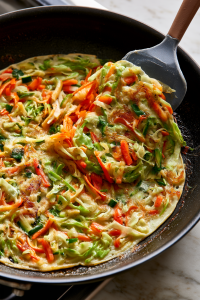
- Cook the first pancake: Spoon one-quarter of the vegetable mixture into the skillet and spread it into a thin, even circle. Press gently with a spatula so the vegetables hold together. Cook for 3–4 minutes, until the underside is golden and the edges begin to look set.
- Flip and cook: Carefully flip the pancake and cook for another 3–4 minutes, adding a little more oil around the edges if needed. The second side should become crisp and golden, and the vegetables should be tender. Transfer to a plate.
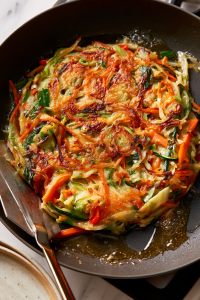
- Cook the remaining pancakes: Repeat with the remaining batter, adding fresh oil to the skillet as needed. Avoid stacking the cooked pancakes for too long, as trapped steam can soften their crispy edges.
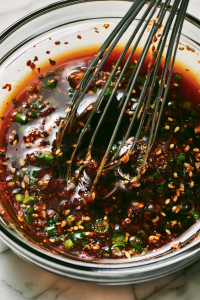
- Prepare the dipping sauce: In a small bowl, whisk together the soy sauce, rice vinegar, sesame oil, honey or maple syrup, sesame seeds, green onions, and red pepper flakes, if using.
- Slice and serve: Cut the warm pancakes into wedges or squares. Serve immediately with the dipping sauce on the side.
Notes
- Slice vegetables thinly: Thick vegetable pieces may remain undercooked while the outside of the pancake browns.
- Don’t make the pancakes too thick: A thinner layer cooks more evenly and develops a better crisp surface.
- Cook in batches: Give each pancake enough room in the skillet. Crowding makes flipping difficult and can cause the pancakes to steam.
- Make them vegan: Replace the egg with 2 tablespoons of additional water and use maple syrup instead of honey in the dipping sauce. The texture may be slightly less rich.
- Storage: Refrigerate leftover pancakes in an airtight container for up to 3 days. Reheat in a lightly oiled skillet or air fryer to restore some crispness.
Nutrition Information
| Nutrient | Amount per Serving |
|---|---|
| Calories | 285 kcal |
| Carbohydrates | 39g (estimated) |
| Protein | 9g (estimated) |
| Fat | 10g (estimated) |
| Fiber | 4g (estimated) |
| Sugar | 5g (estimated) |
| Sodium | 780mg (estimated) |
Delicious Variations You Should Not Miss
- Mushroom Vegetable Pancakes: Add finely sliced shiitake or cremini mushrooms for a deeper, savory flavor.
- Spicy Korean Pancakes: Mix a little gochugaru into the batter or add extra red pepper flakes to the dipping sauce.
- Kimchi Vegetable Pancakes: Fold chopped, well-drained kimchi into the vegetable mixture for a tangy, spicy variation. Reduce the added salt if your kimchi is particularly salty.
- Extra Green Onion Pancakes: Increase the green onions and reduce some of the cabbage for a stronger onion flavor.
- Mushroom and Spinach Pancakes: Combine chopped mushrooms and spinach with the existing vegetables for a more savory filling.
Try More Asian-Inspired Recipes
- Vegetable Spring Rolls Recipe
- Crispy Asian Tofu Recipe
- Crispy Tofu Bowls Recipe
- Spicy Korean Tofu Recipe
- Mushroom Ramen Recipe
Frequently Asked Questions
1. What are Korean vegetable pancakes called?
Korean vegetable pancakes are commonly called Yachaejeon. They are made with a simple batter mixed with vegetables and cooked in a skillet until golden.
2. Are Korean vegetable pancakes vegetarian?
Yes. This recipe is vegetarian because it uses vegetables, flour, egg, and a soy-based dipping sauce.
3. Are Korean vegetable pancakes vegan?
They can be made vegan by replacing the egg with 2 tablespoons of additional water and using maple syrup instead of honey in the dipping sauce. The texture may be slightly different.
4. How do I make vegetable pancakes crispy?
Use cold water, keep the vegetable pieces thin, spread the batter into a thin layer, and cook in a properly heated skillet with enough oil. Avoid overcrowding the pan.
5. Why are my Korean vegetable pancakes soggy?
Excess moisture from the vegetables, a batter that’s too thin, or pancakes that are too thick can cause sogginess.
6. Can I make the batter ahead of time?
It’s better to prepare the vegetables and dipping sauce ahead, then mix the batter just before cooking. Letting the batter sit with the vegetables can draw out moisture and affect the texture.
7. What vegetables can I add to Yachaejeon?
You can use mushrooms, spinach, bean sprouts, sweet potato, or thinly sliced onions. Keep the pieces small and avoid adding too many watery vegetables.