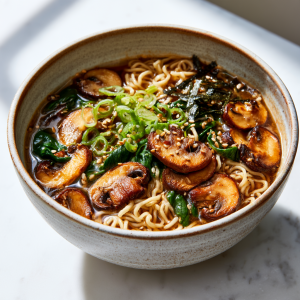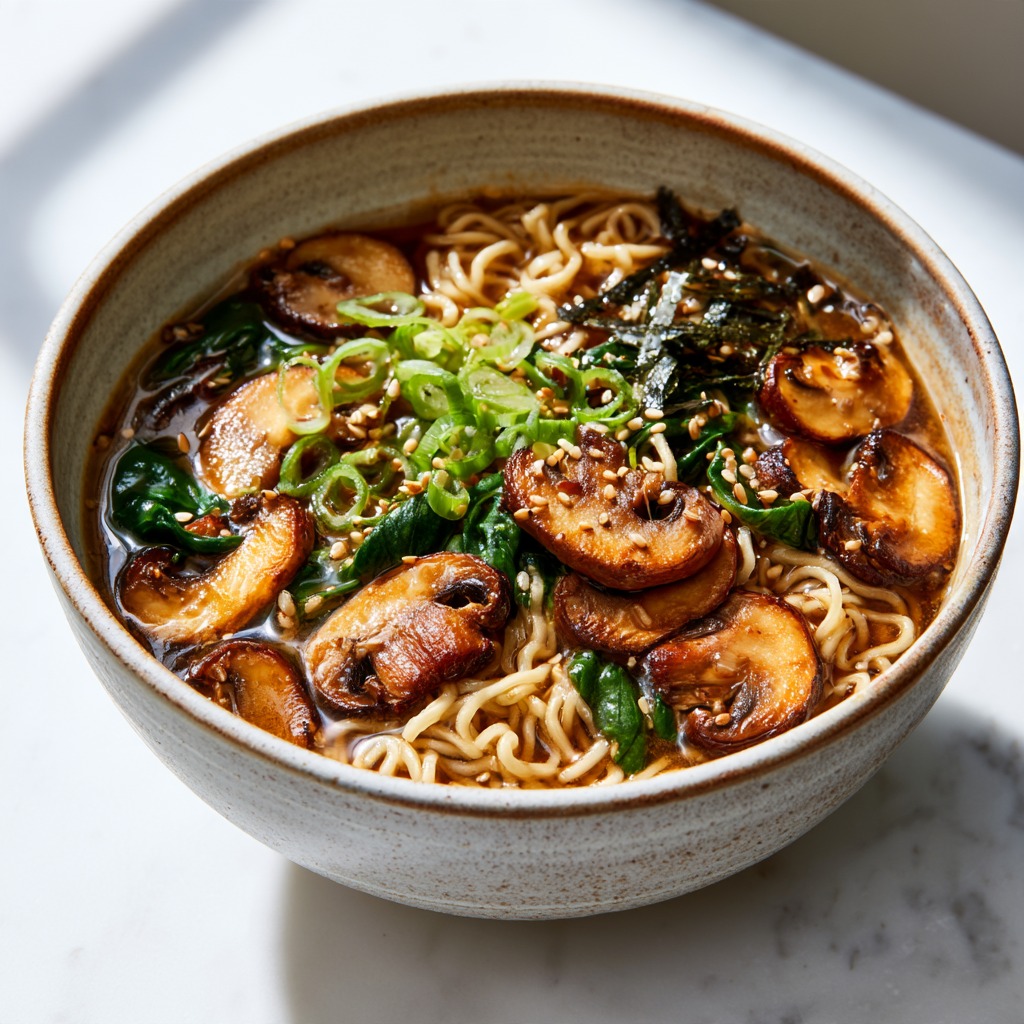
Homemade Mushroom Ramen doesn’t need hours of preparation to develop deep, savory flavor. The secret is browning the mushrooms first, allowing their natural moisture to evaporate and their edges to turn golden.
Springy ramen noodles soak up the flavorful broth, while baby spinach adds freshness and color to every bowl. This recipe comes together in about 30 minutes, making it a lovely choice for a cozy lunch or a quick dinner.
Why You’ll Love This Recipe
- Deep Mushroom Flavor: Browning the mushrooms before adding the broth brings out their natural umami and gives the soup a richer taste.
- A Flavorful Miso Broth: Soy sauce, miso, ginger, and garlic create a savory broth with plenty of depth without requiring hours of simmering.
- Ready in 30 Minutes: The straightforward preparation makes homemade ramen achievable even on busy days.
- Easy to Personalize: Choose your favorite mushrooms and add toppings like soft-boiled eggs, nori, spinach, or chili crisp.
- A Satisfying Meatless Meal: Mushrooms and ramen noodles make a hearty combination that’s comforting enough to enjoy as a complete meal.
Ingredient Substitutions
- Ramen Noodles: Use udon, soba, rice noodles, or another noodle variety. Adjust the cooking time according to the package instructions.
- Cremini Mushrooms: Replace with shiitake, button, oyster, or portobello mushrooms.
- White Miso: Yellow miso is a suitable alternative. Red miso can also work, but it has a stronger and saltier flavor, so use a smaller amount initially.
- Rice Vinegar: Substitute with apple cider vinegar, using a slightly smaller amount and adjusting to taste.
- Baby Spinach: Use bok choy, kale, or napa cabbage instead.
Chef’s TipDon’t rush the mushroom-browning step. Spread the slices in a single layer and let them develop golden edges before stirring.
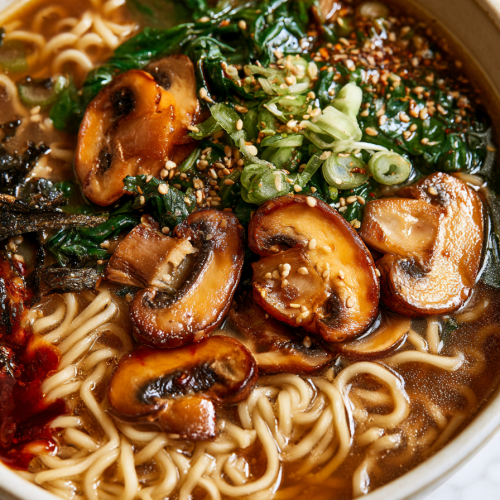
Mushroom Ramen Recipe
Equipment
- Large pot or Dutch oven
- Large skillet
- Cutting board and knife
- Wooden spoon or spatula
- Ladle
Ingredients
For the Mushroom Ramen
- 8 ounces ramen noodles about 225 g
- 1 tablespoon sesame oil
- 1 tablespoon neutral cooking oil
- 12 ounces cremini or shiitake mushrooms sliced
- 4 cloves garlic minced
- 1 tablespoon freshly grated ginger
- 4 green onions thinly sliced, whites and greens separated
- 4 cups vegetable broth
- 2 cups water
- 3 tablespoons soy sauce
- 1 tablespoon white or yellow miso paste
- 1 tablespoon rice vinegar
- 1 teaspoon brown sugar
- ½ teaspoon chili flakes optional
- 2 cups baby spinach
- 1 teaspoon toasted sesame seeds for garnish
Optional Toppings
- Soft-boiled eggs halved
- Nori sheets cut into strips
- Extra sliced green onions
- Chili oil or chili crisp
- Fresh cilantro
Instructions
- Prepare the noodles: Cook the ramen noodles according to the package instructions until just tender. Drain and rinse briefly under cool water to stop the cooking. Set aside. If using fresh ramen noodles, follow their package directions.
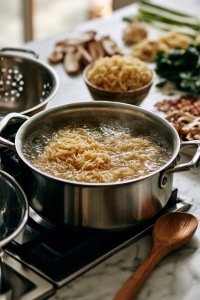
- Brown the mushrooms: Heat the neutral oil in a large skillet over medium-high heat. Add the sliced mushrooms in a single layer, working in batches if needed. Cook for 5–7 minutes, stirring occasionally, until their moisture evaporates and the edges turn golden. Transfer half of the mushrooms to a plate for topping.
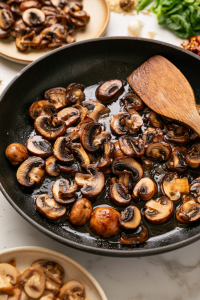
- Cook the aromatics: Reduce the heat to medium. Add the sesame oil, garlic, ginger, and the white parts of the green onions to the remaining mushrooms. Cook for about 1 minute, stirring constantly, until fragrant.
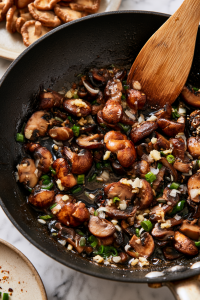
- Build the broth: Pour in the vegetable broth and water. Stir in the soy sauce, miso paste, rice vinegar, brown sugar, and chili flakes, if using. Bring the mixture to a gentle simmer and cook for 5 minutes to let the flavors come together.
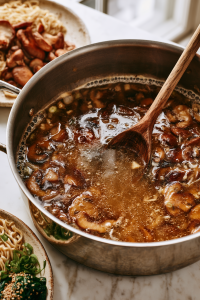
- Add the spinach: Stir in the baby spinach and cook for 1–2 minutes, just until wilted. Taste the broth and adjust the seasoning with additional soy sauce or a little water if needed.
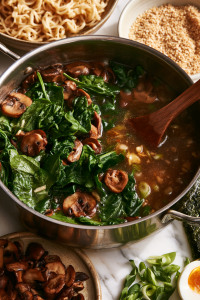
- Assemble the bowls: Divide the cooked ramen noodles among four serving bowls. Ladle the hot mushroom broth and spinach over the noodles, making sure each bowl gets plenty of mushrooms.
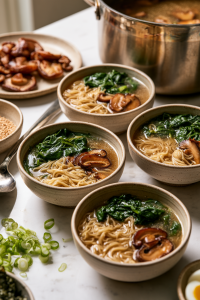
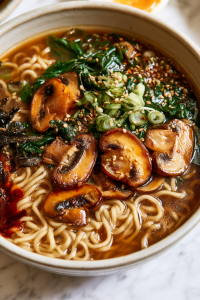
- Add toppings and serve: Finish with the reserved browned mushrooms, green onion tops, and sesame seeds. Add soft-boiled eggs, nori, or chili oil if desired. Serve immediately while hot.
Notes
- Choose your mushrooms: Cremini mushrooms give the broth a deep, earthy flavor, while shiitake mushrooms add a more pronounced savory taste. A combination of both works especially well.
- Use white or yellow miso: These varieties add gentle umami without overpowering the mushrooms. Miso can be salty, so taste the broth before adding extra soy sauce.
- Keep the noodles separate: Store cooked noodles separately from the broth if preparing ahead. This prevents them from absorbing too much liquid and becoming soft.
- Make it vegan: Use vegan ramen noodles and skip the egg topping. Check that your miso paste and noodles are vegan-friendly.
- Adjust the heat: Add chili flakes to the broth or finish each bowl with chili oil so everyone can choose their preferred spice level.
Nutrition Information
| Nutrient | Approximate Amount |
|---|---|
| Calories | 385 kcal |
| Carbohydrates | 54 g |
| Protein | 14 g |
| Fat | 13 g |
| Fiber | 5 g |
| Sugar | 7 g |
| Sodium | 1,050 mg |
Common Mistakes to Avoid
- Not Browning the Mushrooms Properly: Mushrooms release moisture as they cook. Give them enough space in the skillet and allow the liquid to evaporate before adding the aromatics.
- Overcrowding the Skillet: Too many mushrooms at once can cause them to steam instead of brown.
- Adding Too Much Soy Sauce: Miso and vegetable broth may already contain salt.
- Boiling the Broth Too Aggressively: A gentle simmer is enough to bring the flavors together.
- Overcooking the Noodles: Soft noodles can become mushy when sitting in hot broth.
Try More Asian-Inspired Recipes
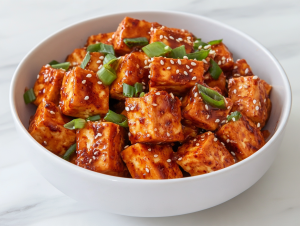
- Spicy Korean Tofu Recipe
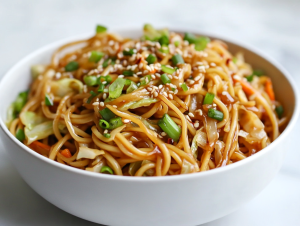
- Sesame Cabbage Noodles Recipe
- m
- m
- m
Frequently Asked Questions
1. What mushrooms work best for Mushroom Ramen?
Cremini and shiitake mushrooms are excellent choices. Cremini mushrooms have a mild, earthy flavor, while shiitake mushrooms provide a deeper savory taste.
2. Can I make Mushroom Ramen vegan?
Yes. Use vegan ramen noodles, check that the miso paste and broth are vegan-friendly, and skip the egg topping. Maple syrup can replace honey if you choose to use it.
3. How do I make the mushroom broth more flavorful?
Brown the mushrooms until their moisture evaporates and their edges turn golden. Using miso paste, garlic, ginger, and good-quality vegetable broth also helps develop a deeper flavor.
4. Can I use dried mushrooms instead of fresh ones?
Yes. Rehydrate dried shiitake mushrooms in warm water until tender. You can strain and use some of the soaking liquid in the broth for additional mushroom flavor, making sure to leave any sediment behind.
5. Can I make this ramen gluten-free?
Yes. Choose certified gluten-free ramen or rice noodles, use tamari instead of regular soy sauce, and check that the miso paste and vegetable broth are gluten-free.
6. Why should I cook the noodles separately?
Cooking the noodles separately prevents them from absorbing too much broth and becoming overly soft. It also makes leftovers easier to store and reheat.
7. Can I add more vegetables to this ramen?
Absolutely. Bok choy, shredded carrots, napa cabbage, bean sprouts, and snow peas are all good additions. Add vegetables according to their cooking time so they retain a pleasant texture.