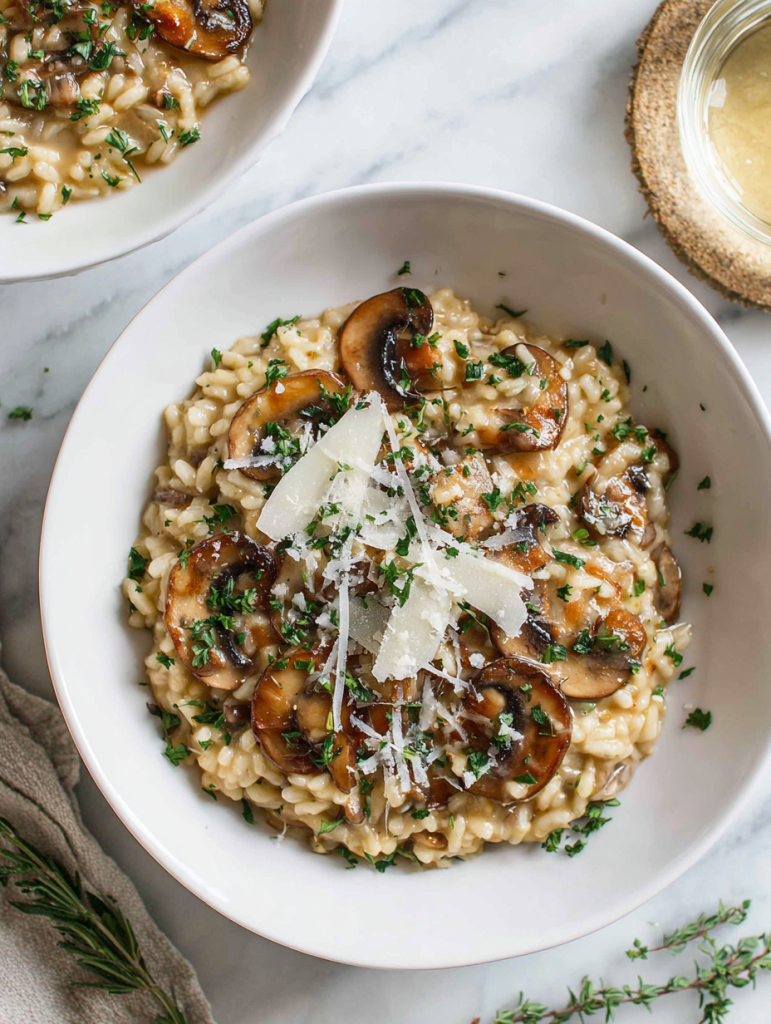
Making mushroom risotto is like a slow dance with your ingredients. It’s not quick, but the process of stirring, smelling, and tasting becomes a kind of meditative ritual. Every turn of the spoon releases a new wave of earthy aroma, making the kitchen feel cozy and alive.
There’s something about the act of patiently coaxing flavors out of simple ingredients that turns cooking into therapy. As the rice slowly absorbs the mushroom broth, it transforms from plain to creamy, textured with tiny bites of mushroom and a glossy sheen. It’s a quiet, satisfying process that rewards you with a dish full of rich, layered flavor.
This isn’t just about making dinner—it’s about taking your time, paying attention, and enjoying each step. It’s a mindful practice, a way to pause and connect with the food, turning a humble bowl into something special. Plus, the smell of garlic, mushrooms, and toasty rice filling the room is pure comfort.
Focusing on the meditative process of making mushroom risotto, emphasizing the slow, mindful stirring and the sensory journey through textures and aromas, as a form of culinary therapy.
The mindful art of risotto
- There’s a quiet joy in watching the rice slowly turn creamy, almost like a little magic happening right on the stove.
- Cooking this dish reminds me to slow down and really savor each step, even when the chaos of the day tries to rush me.
- The earthy aroma of mushrooms simmering makes the whole kitchen feel like a cozy retreat from the world.
- Every time I make risotto, I feel a little proud that I’ve managed to coax such rich flavor from simple ingredients.
- Sharing this dish with loved ones feels like offering a warm, grounding moment in the middle of a busy week.
The mindful art of risotto
Making mushroom risotto has always been my way of creating a little moment of calm in the chaos. I remember the first time I really paid attention to the process—the way the rice slowly releases its starch, turning silky and rich, while the mushrooms deepen in flavor with every stir. It’s a dish that demands patience but rewards you with a depth of flavor that feels like a warm embrace after a long day. The ritual of stirring, smelling, and tasting has become my meditation, a way to reconnect with the simple joy of cooking.
Contextual origin, trivia, or history
- Mushroom risotto has roots in Northern Italy, particularly in the Lombardy region where foraged mushrooms are abundant.
- Traditionally, this dish was a way for rustic farmers to make a hearty meal from wild mushrooms and simple rice.
- The technique of slowly stirring rice to release its starch and create creaminess predates modern culinary tools, dating back centuries.
- In Italy, ‘risotto’ is more than just a dish—it’s a technique that emphasizes patience and attention to texture.
- Wild mushrooms used in risotto, like porcini, have been prized for their earthy flavor since ancient times, often seen as a delicacy.
Ingredient breakdown
- Mushrooms: I love using a mix of cremini and shiitake for depth—sizzle until they release that earthy, smoky aroma that wraps around your senses.
- Arborio Rice: This starchy rice is the core—sauté it just enough to toast lightly and start releasing a nutty scent, but don’t let it brown.
- Vegetable Broth: Always warm it up before adding; cold liquid cools the rice, delaying that creamy magic. The aroma should be savory and inviting.
- Onion & Garlic: Finely chop and cook until translucent—your kitchen will fill with a sweet, fragrant aroma that’s the soul of the dish.
- Parmesan: Freshly grated adds a salty, umami kick—stir it in at the end while off heat to melt into that glossy, silky finish.
- Olive Oil & Butter: Use good quality—each splash should glide smoothly, adding a rich, nutty scent that complements the earthiness of the mushrooms.
- Fresh Herbs (Thyme or Parsley): Chopped at the end—bright, herbal notes that lift the dish and add a fresh pop to every bite.
Spotlight on key ingredients
Mushrooms:
- I love using a mix of cremini and shiitake for depth—sizzle until they release that earthy, smoky aroma that wraps around your senses.
- Arborio Rice: This starchy rice is the core—sauté it just enough to toast lightly and start releasing a nutty scent, but don’t let it brown.
- I love using a mix of cremini and shiitake for depth—sizzle until they release that earthy, smoky aroma that wraps around your senses.
Arborio Rice:
- This starchy rice is the core—sauté it just enough to toast lightly and start releasing a nutty scent, but don’t let it brown.
- Vegetable Broth: Always warm it up before adding; cold liquid cools the rice, delaying that creamy magic. The aroma should be savory and inviting.
- Onion & Garlic: Finely chop and cook until translucent—your kitchen will fill with a sweet, fragrant aroma that’s the soul of the dish.
Notes for ingredient swaps
- Dairy-Free: Use a splash of coconut milk or a nut-based cheese alternative instead of Parmesan. The flavor will be slightly different, with a creamier, slightly sweeter note.
- Vegetable Broth: Swap with mushroom broth for an extra earthy punch, or use water with a splash of soy sauce for umami depth.
- Mushrooms: Substitute with other wild or cultivated fungi like oyster or cremini if you can’t find shiitake or porcini. They each bring a different earthy nuance.
- Arborio Rice: Use Carnaroli or Vialone Nano rice if you want a slightly firmer bite and more traditional texture. Regular long-grain rice will be too loose and gloopy.
- Onion & Garlic: For a milder flavor, try shallots or leeks; skip the garlic if you want a more subdued aroma, but don’t skip the aromatics entirely.
- Olive Oil & Butter: Use a good quality, neutral oil like avocado oil or ghee for a different richness; the flavor profile shifts but still maintains that luscious mouthfeel.
- Fresh Herbs: Basil or tarragon can replace parsley or thyme for a fresh, aromatic twist. Adjust quantity to taste; herbs lift the dish with a bright note.
Equipment & Tools
- Wide pan: Ensures even heat distribution and easy stirring.
- Wooden spoon: Gentle on rice, ideal for stirring.
- Ladle: Helps add broth gradually and control moisture.
- Small saucepan: Keeps broth warm for quick addition.
- Grater: For freshly grated Parmesan to melt smoothly.
Step-by-step guide to mushroom risotto
- Equipment & Tools: Use a wide, heavy-bottomed pan (about 25-30cm diameter) for even heat. Have a wooden spoon for stirring, a ladle for adding broth, and a small saucepan to warm the broth. Finishing knife and grater for cheese.
- Sauté Mushrooms: Heat 2 tbsp olive oil over medium heat (160°C / 320°F). Add sliced mushrooms; cook until golden and fragrant, about 8 minutes. Remove and set aside. If mushrooms release too much liquid, cook until it evaporates.
- Cook Aromatics: In the same pan, add 1 tbsp butter and a finely chopped small onion. Sauté until translucent, about 3-4 minutes. Add minced garlic; cook until fragrant, about 30 seconds.
- Toast Rice: Stir in 1 ½ cups Arborio rice. Cook, stirring constantly, until rice edges turn translucent around 2 minutes. It should smell nutty and slightly toasty. If it starts to brown, lower heat.
- Add Broth Gradually: Pour in about ½ cup warm vegetable broth. Stir until mostly absorbed. Repeat, adding ½ cup broth at a time, stirring continuously. Maintain a gentle simmer (~85°C / 185°F). After 20 minutes, rice should be tender but still have a slight bite.
- a. Sensory Check: The risotto should look creamy, with a glossy sheen. The rice should be al dente—just tender with a touch of firmness. The aroma will be earthy and toasty.
- b. Fix if Too Dry: If rice looks dry before tender, add a splash more broth and stir. If too wet, cook a bit longer to reduce excess liquid.
- Finish & Stir In: When rice is creamy and tender (about 25 minutes total), stir in reserved mushrooms, ½ cup grated Parmesan, and a final tablespoon of butter. Taste for seasoning; adjust with salt and pepper.
- Rest & Plate: Let sit off heat for 2 minutes. Serve immediately, garnished with chopped parsley or herbs of choice. The risotto should be rich, velvety, with a slight chew and earthy aroma.
Let the risotto rest off heat for 2 minutes. Serve immediately, garnished with fresh herbs, with a drizzle of olive oil if desired.
How to Know It’s Done
- The rice is al dente with a creamy, glossy appearance.
- Mushrooms are browned and fragrant, not soggy or dry.
- The aroma is earthy, toasted, and inviting, with no raw onion or garlic smell.
Creamy Mushroom Risotto
Equipment
- Wide pan
- Wooden spoon
- Ladle
- Small saucepan
- Grater
Ingredients
- 2 tablespoons olive oil Good quality
- 2 tablespoons butter Unsalted preferred
- 1 small onion Finely chopped
- 3 cloves garlic Minced
- 1 ½ cups Arborio rice Starchy rice for creaminess
- 1 ½ cups vegetable broth Warm, for gradual addition
- 8 oz mushrooms Cremini and shiitake, sliced
- ½ cup Parmesan cheese Freshly grated
- 1 tablespoon fresh herbs Parsley or thyme, chopped
Instructions
- Heat a wide pan over medium heat and add the olive oil. Once shimmering, toss in the sliced mushrooms and cook until they release their earthy aroma and turn golden brown, about 8 minutes. Remove and set aside.
- Add butter to the same pan, letting it melt gently. Stir in the finely chopped onion and cook until translucent and sweet-smelling, around 3-4 minutes.
- Mix in the minced garlic and cook for just 30 seconds until fragrant, filling the kitchen with a savory aroma.
- Add the Arborio rice to the pan, stirring constantly. Toast the grains for about 2 minutes until they look translucent at the edges and smell nutty.
- Pour in ½ cup of warm vegetable broth and stir until mostly absorbed, then continue adding broth in ½ cup increments, stirring gently each time. Keep the heat low to medium, maintaining a gentle simmer, and stir continuously.
- After about 20 minutes, the rice should be tender yet slightly firm (al dente), and the mixture will be creamy and glossy. If it gets too thick, add a splash more warm broth and stir to loosen.
- Stir in the sautéed mushrooms, grated Parmesan, and the chopped herbs. Mix well until everything is combined and heated through.
- Taste and adjust seasoning with salt and pepper if needed. Let the risotto rest off the heat for 2 minutes to settle and deepen in flavor.
- Scoop the risotto into warm bowls, garnish with extra herbs if desired, and serve immediately to enjoy its creamy, earthy goodness with a fragrant aroma filling the room.
Pro tips for perfect risotto
- Sauté Mushrooms Properly:** Cook until they release a deep, earthy aroma and turn golden-brown—this develops their flavor fully.
- Toast the Rice:** Stir constantly over medium heat until the edges are translucent and smell nutty—this enhances texture and flavor.
- Add Broth Gradually:** Pour in warm broth a ladle at a time, stirring gently—wait until nearly absorbed for a creamy, velvety risotto.
- Stir Gently but Consistently:** Keep a steady rhythm to release rice starch without breaking grains—this creates the signature silkiness.
- Finish with Parmesan Off Heat:** Stir in cheese just after removing from heat—this preserves its creamy melt and rich flavor.
- Taste Before Serving:** Check for the perfect al dente bite and adjust salt—risotto should be flavorful and balanced, not flat.
Common mistakes and how to fix them
- TOO MUCH HEAT: Use medium-low to prevent mushrooms from burning and turning bitter.
- NOT ENOUGH STIRRING: Keep stirring gently to release rice starch and achieve creaminess.
- SKIPPING BROTH WARMTH: Always warm broth; cold liquid cools rice and delays cream formation.
- OVERCOOKING RICE: Check for al dente texture; overcooking makes risotto mushy.
Quick fixes for mushroom risotto
- If mushrooms release too much liquid, increase heat to evaporate excess moisture quickly.
- When risotto becomes too thick, splash in warm broth and stir until creamy again.
- Splash a bit of lemon juice if the dish lacks brightness after cooking.
- Patch undercooked rice by adding a splash of hot broth and cooking a few more minutes.
- Shield burning rice by lowering heat immediately and stirring constantly to prevent sticking.
Prep, store, and reheat tips
- Prepare the broth and chop mushrooms a day in advance; store in airtight container in the fridge for up to 24 hours. The earthy aroma will deepen overnight.
- Cook the rice and keep it in the fridge for up to 2 days, covered tightly. Reheat gently with a splash of warm broth to revive its creamy texture.
- Assemble ingredients and have everything measured beforehand—this dish demands your full attention during cooking, so prep makes the process smoother.
- Reheat leftovers on the stovetop over low heat, stirring gently, until warmed through and the aroma of mushroom and Parmesan reemerges. Avoid microwaving to keep the texture intact.
- Risotto tends to thicken when cooled; add a bit of warm broth or water during reheating, and stir until it regains that velvety consistency and fragrant aroma.
Top questions about mushroom risotto
1. What mushrooms work best for flavor?
Use a mix of earthy mushrooms like cremini and shiitake for the richest flavor. Sauté until they release their smoky aroma, about 8 minutes.
2. Why is stirring so important?
Stirring continuously helps release rice starch, creating that creamy, velvety texture characteristic of good risotto. Keep the heat moderate to avoid burning.
3. Should I use hot or cold broth?
Always warm your broth before adding—cold broth cools the rice and slows down the cooking process, resulting in a less creamy risotto.
4. How do I get that perfect creamy texture?
Add broth gradually, about half a cup at a time, waiting until it’s mostly absorbed before adding more. This slow addition builds flavor and creaminess.
5. How do I know when the risotto is done?
Check for al dente rice; it should be tender but still have a slight bite. The risotto should look glossy and feel velvety when ready.
6. What if my risotto is too thick or too runny?
If the risotto becomes too thick, stir in a splash of warm broth. If too runny, cook a few minutes longer until it thickens and releases a rich aroma.
7. How do I finish the risotto perfectly?
Finish with freshly grated Parmesan and a knob of butter off heat. Stir quickly for a glossy, rich finish that releases a nutty, cheesy aroma.
8. Can I make risotto ahead?
Risotto is best served immediately while velvety and hot, with a fragrant aroma of mushrooms and cheese filling the room.
9. How do I reheat risotto without ruining it?
Reheat leftovers gently on the stove with a splash of broth, stirring until the dish regains its creamy, aromatic quality. Avoid microwaving to preserve texture.
10. What equipment do I need for perfect risotto?
Use a wide, heavy pan for even heat and easy stirring. Keep broth warm in a separate pan for quick, consistent addition, and have a sturdy wooden spoon ready.
Making mushroom risotto is a quiet act of focus and patience, a way to slow down in a busy world. The aroma of earthy mushrooms and toasted rice lingering in the air is a small but satisfying reward. It’s a dish that asks for your attention and rewards you with deep, layered flavors.
When you take the time to stir, taste, and adjust, the final bowl feels like a small accomplishment—a rich, velvety reminder that good things happen when you move at your own pace. It’s more than dinner; it’s a mindful moment you carry into the rest of your day.