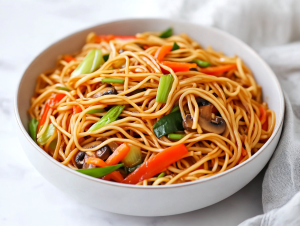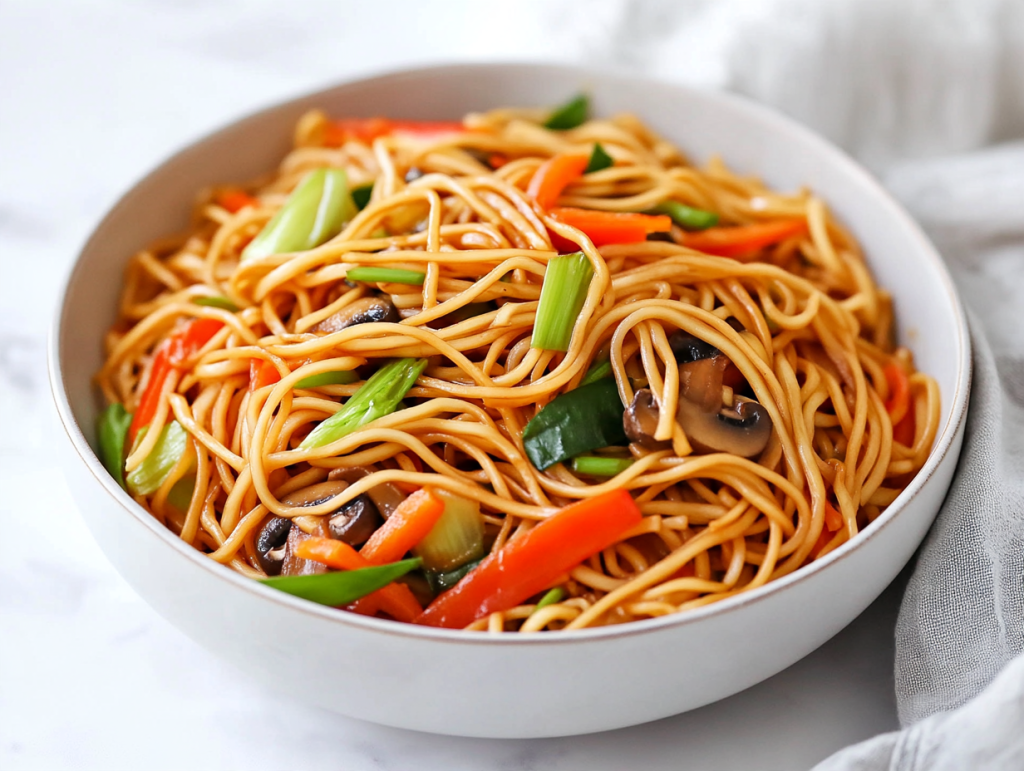
Skip the takeout menu and make a fresh batch of Vegetable Chow Mein right at home! This easy noodle dish combines thin, springy chow mein noodles with cabbage, carrots, bell peppers, mushrooms, and green onions.
The best part is how quickly everything comes together. The vegetables stay lightly crisp, the noodles soak up the flavorful sauce, and each bite has a satisfying mix of textures.
Why You’ll Love This Recipe
- Takeout-Style Noodles at Home: The combination of dark soy sauce, regular soy sauce, and sesame oil gives the noodles a rich color and familiar restaurant-style flavor.
- A Good Mix of Vegetables: Cabbage, carrots, bell peppers, and mushrooms add different textures and make every serving colorful.
- Ready in Just 30 Minutes: The noodles and sauce come together quickly, making this a practical choice for busy evenings.
- A Delicious Way to Use Pantry Staples: Soy sauce, garlic, ginger, and noodles form the base of a flavorful meal without requiring hard-to-find ingredients.
- Easy to Make Your Own: Switch up the vegetables, adjust the sauce, or add tofu and edamame to suit your preferences.
Ingredient Substitutions for Different Needs
- Use Different Noodles: Thin egg noodles, dried chow mein noodles, or suitable wheat noodles can replace fresh chow mein noodles.
- Make It Vegetarian: Use vegetarian oyster sauce or mushroom stir-fry sauce instead of regular oyster sauce.
- Make It Vegan: Choose egg-free noodles and ensure the soy sauce, stir-fry sauce, and other ingredients are fully plant-based.
- Choose Other Vegetables: Broccoli, snap peas, bean sprouts, bok choy, and green beans all work well. Slice them into small pieces for quick cooking.
- Adjust the Sauce: Use a little less brown sugar for a more savory result, or add a splash of rice vinegar if you prefer a tangier flavor.
Chef’s TipBefore adding the noodles to the wok, make sure they’re well drained and lightly coated with oil. Wet noodles can dilute the sauce, while properly drained noodles stay springy and pick up the seasoning more evenly.
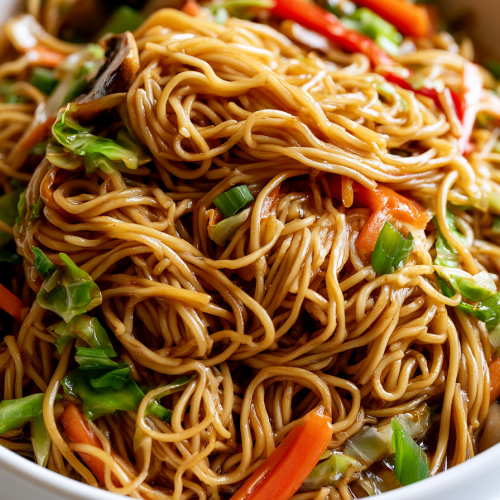
Vegetable Chow Mein Recipe
Equipment
- Large wok or deep skillet
- Large pot for boiling noodles
- Colander
- Cutting board
- Sharp knife
- Mixing bowl
- Tongs or spatula
Ingredients
For the Noodles
- 8 ounces chow mein noodles or thin egg noodles
- 1 tablespoon vegetable oil
For the Vegetables
- 2 tablespoons vegetable oil divided
- 3 cloves garlic minced
- 1 teaspoon freshly grated ginger
- 1 medium carrot julienned
- 2 cups thinly sliced green cabbage
- 1 medium red bell pepper thinly sliced
- 1/2 cup sliced mushrooms
- 3 green onions cut into 2-inch pieces
For the Chow Mein Sauce
- 3 tablespoons low-sodium soy sauce
- 1 tablespoon dark soy sauce
- 1 tablespoon vegetarian oyster sauce or regular oyster sauce
- 1 tablespoon rice vinegar
- 1 teaspoon sesame oil
- 1 teaspoon brown sugar
- 1/4 teaspoon ground black pepper
Instructions
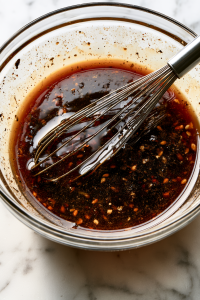
- Whisk together the low-sodium soy sauce, dark soy sauce, oyster sauce, rice vinegar, sesame oil, brown sugar, and black pepper in a small bowl. Set aside.
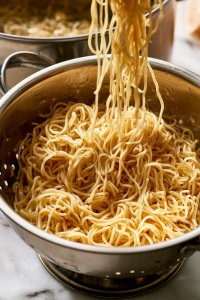
- Bring a large pot of water to a boil. Cook the chow mein noodles according to the package instructions until just tender. Avoid overcooking, as they will cook briefly again in the wok. Drain well, rinse briefly with cool water if needed to stop the cooking, and toss with 1 tablespoon of vegetable oil to prevent sticking.
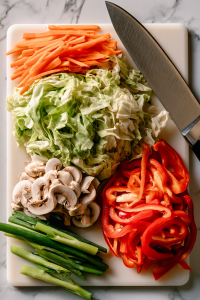
- Slice the carrot, cabbage, bell pepper, mushrooms, and green onions. Keep the vegetables close to the stove so they're ready to add quickly.
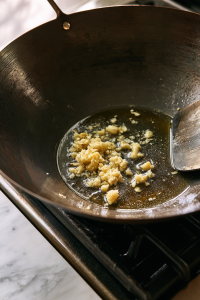
- Heat 1 tablespoon of vegetable oil in a large wok over medium-high heat. Add the minced garlic and grated ginger. Stir-fry for about 30 seconds until fragrant.
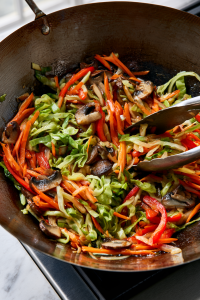
- Add the carrot and mushrooms and cook for 2 minutes. Add the cabbage and bell pepper, then stir-fry for another 2–3 minutes. The vegetables should soften slightly while retaining some crunch.
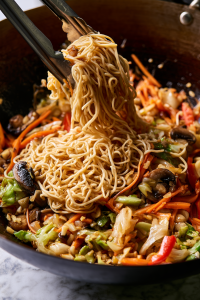
- Add the cooked noodles to the wok. Use tongs to toss them with the vegetables, separating any strands that have stuck together.
- Pour the prepared sauce over the noodles. Toss continuously for 1–2 minutes, making sure the sauce coats the noodles and vegetables evenly. Add a tablespoon of water if the noodles seem too dry.
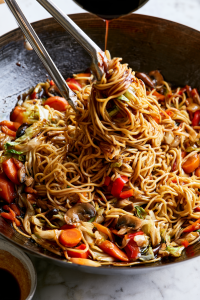
- Add the green onions and give everything one final toss.
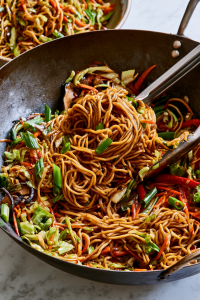
- Remove from the heat and serve immediately while hot.
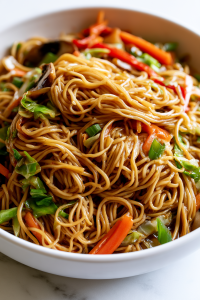
Notes
- Choose the right noodles: Fresh chow mein noodles are ideal, but dried chow mein or thin egg noodles also work. Cook according to the package directions.
- Don’t overcook the noodles: Slightly firm noodles hold their shape better when tossed in the wok.
- Keep the vegetables crisp: Cut them into thin, even pieces and cook over medium-high to high heat. Avoid adding all the vegetables at once if your pan is small.
- Make it vegetarian: Use vegetarian oyster sauce or mushroom stir-fry sauce. For a fully vegan version, choose egg-free noodles and check that all sauces are plant-based.
- Add protein: Toss in crispy tofu, edamame, or cooked mushrooms for a heartier meal.
Nutrition Information
| Nutrient | Amount per Serving |
|---|---|
| Calories | 345 kcal |
| Carbohydrates | Estimated 51g |
| Protein | Estimated 10g |
| Fat | Estimated 11g |
| Fiber | Estimated 5g |
| Sugar | Estimated 7g |
| Sodium | Estimated 850mg |
Cooking Tips and Tricks
- Prepare Everything Before Heating the Wok: Chop the vegetables, mix the sauce, and drain the noodles before you start cooking. Stir-frying happens quickly.
- Keep the Noodles Slightly Firm: Cook them just shy of your preferred tenderness so they hold their shape when tossed with the vegetables and sauce.
- Use Medium-High Heat: A properly heated wok helps the vegetables cook quickly while retaining their texture.
- Add Vegetables in Stages: Carrots and mushrooms need slightly more time than cabbage and bell peppers, so add them first.
- Toss With Tongs: Tongs make it easier to separate noodle strands and distribute the sauce without breaking the noodles.
Try More Asian-Inspired Recipes
- Roasted Sweet Potato Recipe
- Cheesy Potato Skins Recipe Vegetarian
- Spicy Potato Wedges Recipe
- Herb Roasted Potatoes Recipe
- Crispy Asian Tofu Recipe
Frequently Asked Questions
1. What noodles are best for vegetable chow mein?
Fresh chow mein noodles are a great choice because they have a springy texture and cook quickly. Dried chow mein noodles or thin egg noodles also work well.
2. Can I make vegetable chow mein without a wok?
Yes. A large, deep skillet works perfectly well. Choose one with enough surface area to toss the noodles and vegetables comfortably.
3. How do I keep chow mein noodles from sticking together?
Avoid overcooking the noodles, drain them thoroughly, and toss them with a little vegetable oil after cooking. Use tongs to separate the strands when adding them to the wok.
4. Is vegetable chow mein vegetarian?
It can be vegetarian if you use vegetarian oyster sauce or mushroom stir-fry sauce instead of regular oyster sauce. Check the noodle and sauce labels if needed.
5. Can I make this recipe vegan?
Yes. Use egg-free noodles and a plant-based stir-fry sauce. Also check that all other sauces and ingredients are vegan-friendly.
6. What vegetables can I add to chow mein?
Broccoli, snap peas, bean sprouts, bok choy, mushrooms, cabbage, and green beans are all good choices. Cut them into thin, evenly sized pieces for quick cooking.
7. Can I add tofu to vegetable chow mein?
Absolutely. Pan-fry or air-fry tofu separately until golden, then toss it with the noodles just before serving so it keeps some of its texture.