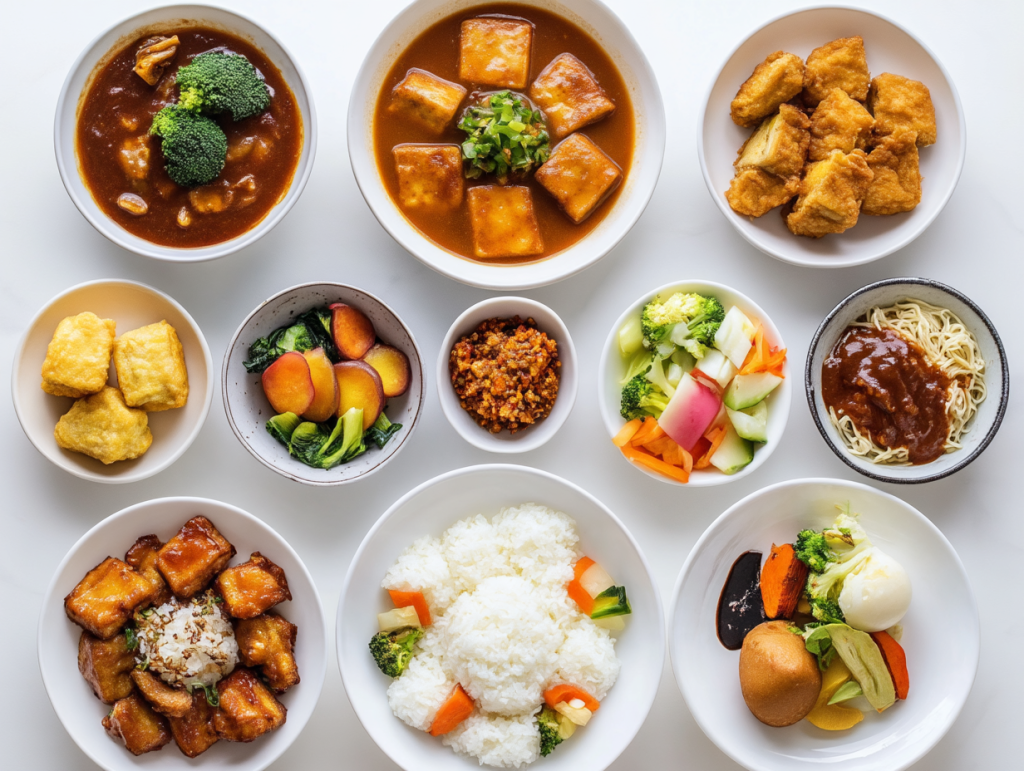
Japanese cuisine offers plenty of plant-based options, from crispy tofu and comforting noodle bowls to rice dishes and sweet Japanese treats. With ingredients like miso, mushrooms, seaweed, tofu, and fresh vegetables, these recipes bring Japanese-inspired flavors into your home kitchen.
Whether you’re looking for a quick lunch, a warming dinner, or a snack to share, these 10 vegan Japanese dishes offer a variety of textures and flavors. Check ingredients such as dashi, sauces, and noodles to make sure they contain no fish, eggs, or other animal products.
1. Vegan Japanese Curry
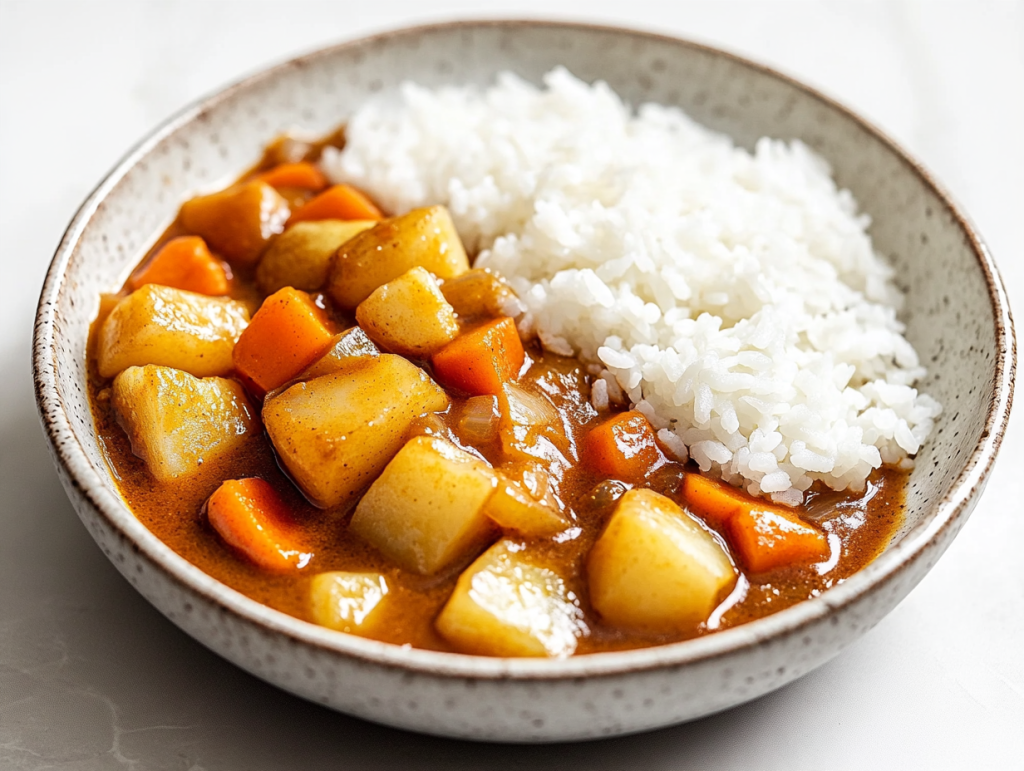
Vegan Japanese curry is a comforting dish made with tender vegetables simmered in a thick, mildly spiced curry sauce. Served over warm rice, it offers a satisfying combination of savory flavors and a smooth, hearty texture.
Potatoes, carrots, and onions form the base of this curry, while garlic, ginger, soy sauce, and curry powder add depth. A plant-based broth and a simple flour-based roux help create the rich consistency commonly associated with Japanese curry.
This easy recipe is suitable for weeknight dinners and meal preparation. Serve it with steamed rice, pickled vegetables, or a side of crisp cucumber salad for a complete meal.
Servings: 4
Ingredients
- 2 cups cooked Japanese short-grain rice
- 1 tablespoon vegetable oil
- 1 medium onion, chopped
- 2 medium carrots, peeled and diced
- 2 medium potatoes, peeled and cubed
- 2 garlic cloves, minced
- 1 teaspoon freshly grated ginger
- 2 tablespoons all-purpose flour
- 2 tablespoons Japanese curry powder
- 3 cups vegetable broth
- 1 tablespoon soy sauce
- 1 teaspoon tomato paste
- ½ teaspoon salt, or to taste
- ¼ teaspoon black pepper
Instructions
- Heat the vegetable oil in a large saucepan over medium heat. Add the chopped onion and cook for 4–5 minutes, stirring occasionally, until softened.
- Add the garlic and ginger and cook for 30 seconds until fragrant. Stir in the carrots and potatoes, coating the vegetables with the aromatics.
- Sprinkle the flour and curry powder over the vegetables. Stir continuously for 1–2 minutes to combine and lightly toast the mixture.
- Gradually pour in the vegetable broth, stirring to prevent lumps. Add the soy sauce and tomato paste, then bring the mixture to a gentle boil.
- Reduce the heat, cover partially, and simmer for 20–25 minutes, stirring occasionally, until the potatoes and carrots are tender and the curry sauce has thickened. Season with salt and black pepper to taste.
- Divide the cooked rice among four bowls and spoon the hot vegan curry alongside or over the rice. Serve immediately.
2. Crispy Agedashi Tofu
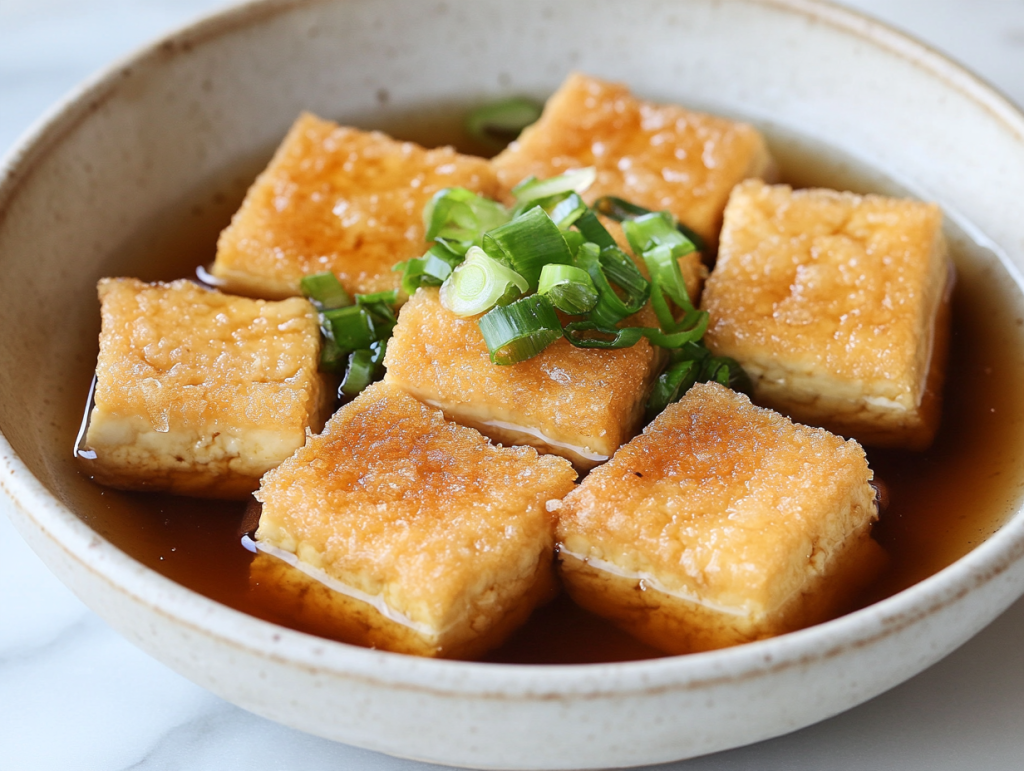
Crispy agedashi tofu is a Japanese-inspired dish featuring lightly coated tofu with a golden, crunchy exterior and a soft, tender center. Traditionally served in a warm savory broth, this popular appetizer combines delicate textures with a rich umami flavor.
Firm tofu is cut into cubes, coated in potato starch, and fried until crisp. A simple plant-based dashi-style broth made with kombu, soy sauce, and mirin adds a balanced combination of savory, slightly sweet, and earthy flavors.
This vegan version makes a delicious starter or light side dish. Serve it fresh from the pan with sliced green onions, grated daikon, or a sprinkle of sesame seeds for extra flavor.
Servings: 4
Ingredients
- 14 ounces firm tofu
- ½ cup potato starch
- Vegetable oil, for frying
- 2 cups water
- 1 piece dried kombu, about 3 inches long
- 2 tablespoons soy sauce
- 2 tablespoons mirin
- 1 teaspoon grated fresh ginger
- 2 green onions, thinly sliced
- 1 teaspoon sesame seeds (optional)
Instructions
- Drain the tofu and wrap it in paper towels. Place a plate on top for 15–20 minutes to remove excess moisture, then cut the tofu into bite-sized cubes.
- Add the water and dried kombu to a small saucepan. Heat gently for 5–7 minutes without letting it boil, then remove the kombu. Stir in the soy sauce, mirin, and grated ginger. Keep the broth warm over low heat.
- Place the potato starch in a shallow bowl. Pat the tofu cubes dry again, then coat each piece evenly in the starch, shaking off any excess.
- Heat about 2 inches of vegetable oil in a deep skillet to 350°F (175°C). Fry the tofu in batches for 3–5 minutes, turning occasionally, until the coating is crisp and lightly golden.
- Transfer the fried tofu to a wire rack or paper towel-lined plate to drain briefly. Arrange the tofu cubes in shallow serving bowls.
- Pour a little warm broth around the tofu just before serving. Garnish with sliced green onions and sesame seeds if desired, and serve immediately while the tofu is still crisp.
3. Vegan Miso Soup with Tofu and Wakame
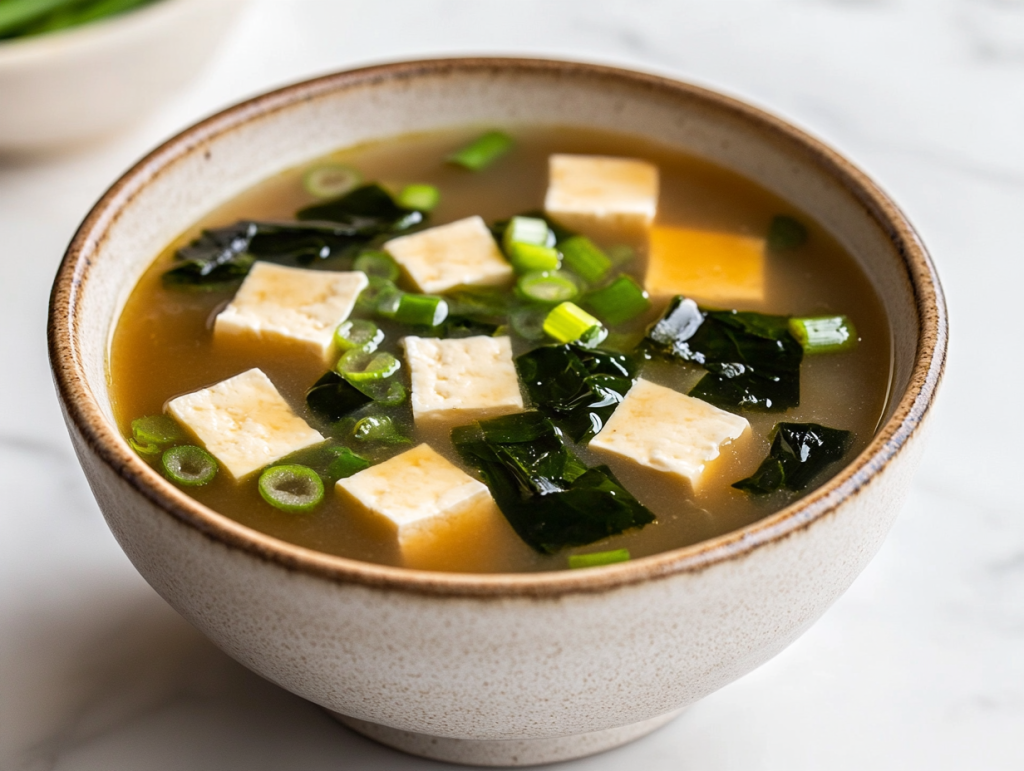
Vegan miso soup with tofu and wakame is a light Japanese soup made with savory miso broth, soft tofu cubes, and delicate seaweed. It offers a comforting combination of gentle umami flavor and simple ingredients.
White or red miso paste gives the broth its distinctive fermented flavor, while kombu creates a plant-based dashi base. Silken or firm tofu adds protein, and wakame seaweed brings a subtle ocean-like taste and tender texture.
This soup works well as a starter, a light lunch, or a side dish with rice and vegetable sushi. It comes together quickly and is best served warm, with freshly sliced green onions added just before serving.
Servings: 4
Ingredients
- 4 cups water
- 1 piece dried kombu, about 3 inches long
- 3 tablespoons white miso paste
- 7 ounces firm or silken tofu, cut into small cubes
- 2 tablespoons dried wakame seaweed
- 2 green onions, thinly sliced
- 1 teaspoon soy sauce (optional)
Instructions
- Add the water and dried kombu to a saucepan. Heat gently for 5–7 minutes without allowing the water to boil, then remove the kombu to prepare a simple plant-based broth.
- Place the dried wakame in a small bowl, cover with water, and soak for 5–10 minutes until rehydrated. Drain and set aside.
- Reduce the heat under the broth to low. Place the miso paste in a small bowl, add a ladleful of warm broth, and whisk until smooth.
- Pour the dissolved miso mixture back into the saucepan. Add the cubed tofu and rehydrated wakame, then warm gently for 2–3 minutes. Avoid boiling the soup, as high heat can affect the miso’s delicate flavor.
- Taste the broth and add soy sauce if desired. Stir gently to distribute the tofu and seaweed without breaking the tofu cubes.
- Ladle the soup into bowls, garnish with sliced green onions, and serve immediately while warm.
4. Vegetable Gyoza

Vegetable gyoza are Japanese dumplings filled with finely chopped vegetables and wrapped in thin dough. They are pan-fried until the bottoms turn golden and crispy, then steamed briefly to create tender wrappers and a flavorful filling.
Cabbage, mushrooms, carrots, and green onions form the base of the filling, while garlic, ginger, soy sauce, and sesame oil add savory depth. The combination of crisp bottoms and soft tops gives these dumplings their characteristic texture.
These vegan dumplings make a tasty appetizer, snack, or light meal. Serve them hot with a simple soy-vinegar dipping sauce for a balanced finish.
Servings: 4
Ingredients
- 24 vegan gyoza wrappers
- 2 cups finely shredded cabbage
- 1 cup finely chopped mushrooms
- 1 medium carrot, grated
- 3 green onions, finely chopped
- 2 garlic cloves, minced
- 1 teaspoon freshly grated ginger
- 1 tablespoon soy sauce
- 1 teaspoon sesame oil
- ¼ teaspoon black pepper
- 1 tablespoon vegetable oil, for pan-frying
- ¼ cup water, for steaming
For the Dipping Sauce
- 2 tablespoons soy sauce
- 1 tablespoon rice vinegar
- 1 teaspoon sesame oil
Instructions
- Place the shredded cabbage in a bowl, sprinkle lightly with salt, and let it sit for 10 minutes. Squeeze out the excess moisture to prevent the dumpling filling from becoming watery.
- Heat the sesame oil in a skillet over medium heat. Add the mushrooms and carrot and cook for 3–4 minutes until softened. Stir in the garlic and ginger and cook for another 30 seconds.
- Add the cabbage, green onions, soy sauce, and black pepper. Cook for 1–2 minutes, then remove from the heat and allow the filling to cool completely.
- Place a gyoza wrapper in your palm and add about 1 teaspoon of filling to the center. Moisten the edges with water, fold the wrapper in half, and press the edges together to seal. Pleat one side if desired. Repeat with the remaining wrappers and filling.
- Heat the vegetable oil in a nonstick skillet over medium heat. Arrange the dumplings flat-side down and cook for 2–3 minutes until the bottoms are golden. Carefully add the water, cover immediately, and steam for 4–5 minutes until the wrappers are tender and the filling is hot. Remove the lid and cook for another minute to crisp the bottoms.
- Mix the soy sauce, rice vinegar, and sesame oil in a small bowl. Transfer the gyoza to a serving plate and serve hot with the dipping sauce.
5. Sesame-Ginger Soba Noodles
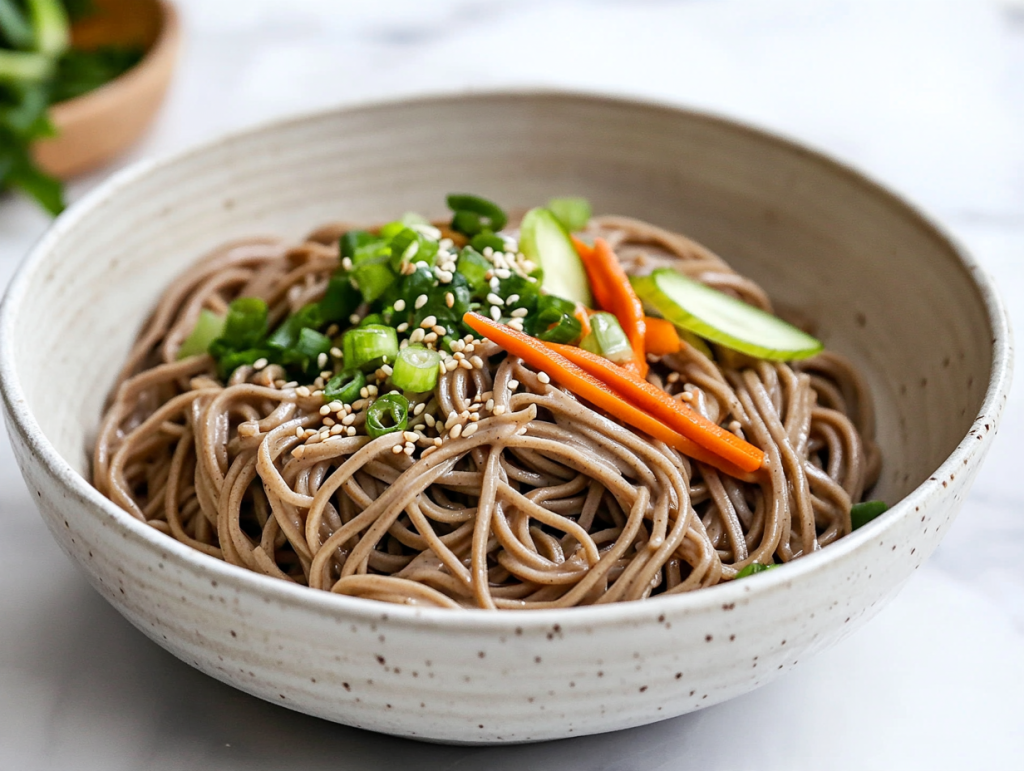
Sesame-ginger soba noodles are a Japanese-inspired dish made with buckwheat noodles tossed in a savory sesame dressing. The noodles have a slightly nutty flavor, while fresh ginger and garlic add warmth and a bright, aromatic taste.
Soy sauce, rice vinegar, sesame oil, and a touch of maple syrup create a balanced dressing that coats every strand. Shredded carrots, cucumber, and green onions add freshness and crunch, making the dish satisfying without feeling heavy.
These vegan soba noodles work well for a quick lunch, a light dinner, or meal prep. Serve them warm or chilled, topped with sesame seeds for extra texture.
Servings: 4
Ingredients
- 8 ounces soba noodles
- 1 medium carrot, julienned
- 1 cucumber, cut into thin strips
- 3 green onions, thinly sliced
- 2 tablespoons sesame seeds
For the Sesame-Ginger Dressing
- 3 tablespoons soy sauce
- 1 tablespoon toasted sesame oil
- 1 tablespoon rice vinegar
- 1 tablespoon maple syrup
- 1 tablespoon freshly grated ginger
- 2 garlic cloves, minced
- 1 teaspoon lime juice
- 1–2 tablespoons water, as needed
Instructions
- Bring a large pot of water to a boil. Cook the soba noodles according to the package instructions until tender, taking care not to overcook them.
- Drain the noodles and rinse thoroughly under cold running water to remove excess starch and stop the cooking. Drain well and set aside.
- In a small bowl, whisk together the soy sauce, sesame oil, rice vinegar, maple syrup, grated ginger, minced garlic, lime juice, and enough water to make a pourable dressing.
- Place the cooled soba noodles in a large bowl. Add the julienned carrot, cucumber strips, and sliced green onions.
- Pour the sesame-ginger dressing over the noodles and vegetables. Toss gently until everything is evenly coated, then let the mixture sit for 5 minutes so the flavors can combine.
- Divide the noodles among serving bowls and sprinkle with sesame seeds. Serve chilled or at room temperature, adding a little extra dressing if desired.
6. Vegan Yakisoba
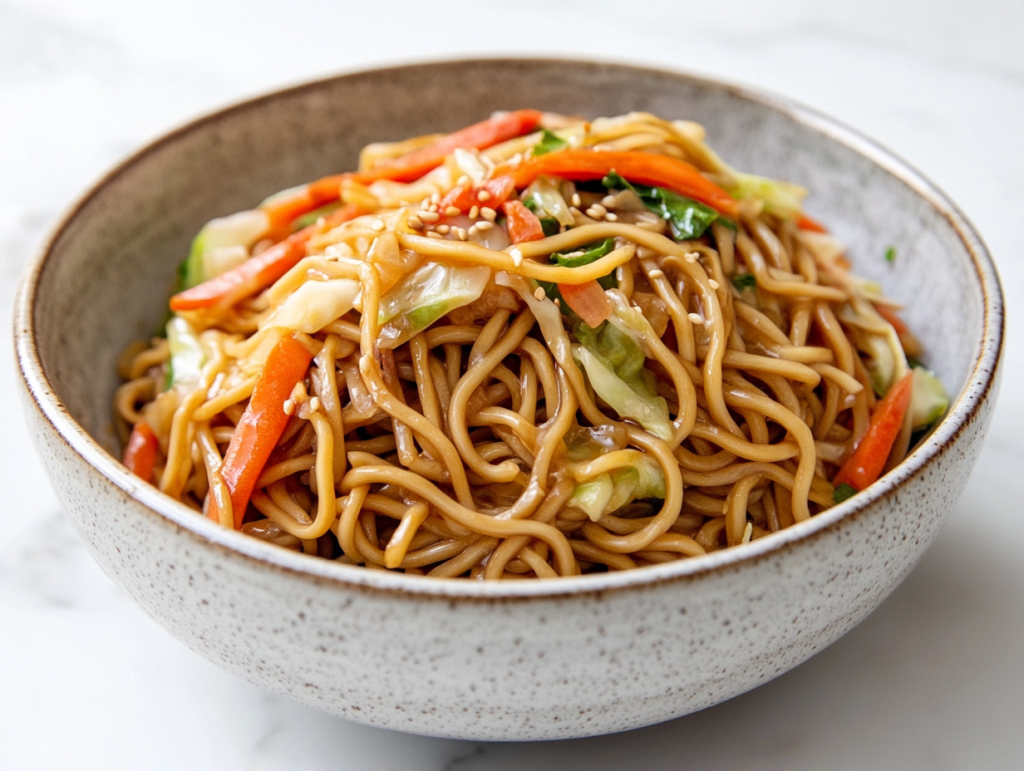
Vegan yakisoba is a Japanese-inspired stir-fried noodle dish made with chewy noodles, crisp vegetables, and a savory, tangy sauce. It delivers a satisfying mix of textures, with lightly caramelized vegetables and noodles coated in a rich, flavorful dressing.
Cabbage, carrots, bell peppers, and mushrooms provide color and crunch, while garlic and ginger add aromatic flavor. A simple sauce made with soy sauce, vegan Worcestershire sauce, rice vinegar, and a touch of sweetness gives the noodles their distinctive savory taste.
This easy plant-based meal is ideal for busy weeknights or a quick lunch. Serve it hot from the skillet with sliced green onions and sesame seeds for a simple Japanese-inspired dinner.
Servings: 4
Ingredients
- 12 ounces vegan yakisoba noodles or other egg-free wheat noodles
- 1 tablespoon vegetable oil
- 2 cups shredded green cabbage
- 1 medium carrot, julienned
- 1 red bell pepper, thinly sliced
- 1 cup sliced mushrooms
- 3 green onions, sliced
- 2 garlic cloves, minced
- 1 teaspoon freshly grated ginger
For the Yakisoba Sauce
- 3 tablespoons soy sauce
- 2 tablespoons vegan Worcestershire sauce
- 1 tablespoon ketchup
- 1 tablespoon rice vinegar
- 1 teaspoon maple syrup
- 2 tablespoons water
Instructions
- In a small bowl, whisk together the soy sauce, vegan Worcestershire sauce, ketchup, rice vinegar, maple syrup, and water until smooth. Set the sauce aside.
- Prepare the noodles according to the package instructions. Drain well and rinse briefly if needed to prevent sticking.
- Heat the vegetable oil in a large skillet or wok over medium-high heat. Add the garlic and ginger and stir-fry for about 30 seconds until fragrant.
- Add the cabbage, carrot, bell pepper, and mushrooms. Stir-fry for 4–5 minutes until the vegetables soften slightly but retain some crunch.
- Add the prepared noodles and yakisoba sauce. Toss everything together and cook for another 2–3 minutes, stirring frequently, until the noodles are heated through and evenly coated in sauce.
- Stir in the sliced green onions, then divide the noodles among serving bowls. Garnish with sesame seeds if desired and serve immediately.
7. Umeboshi Onigiri
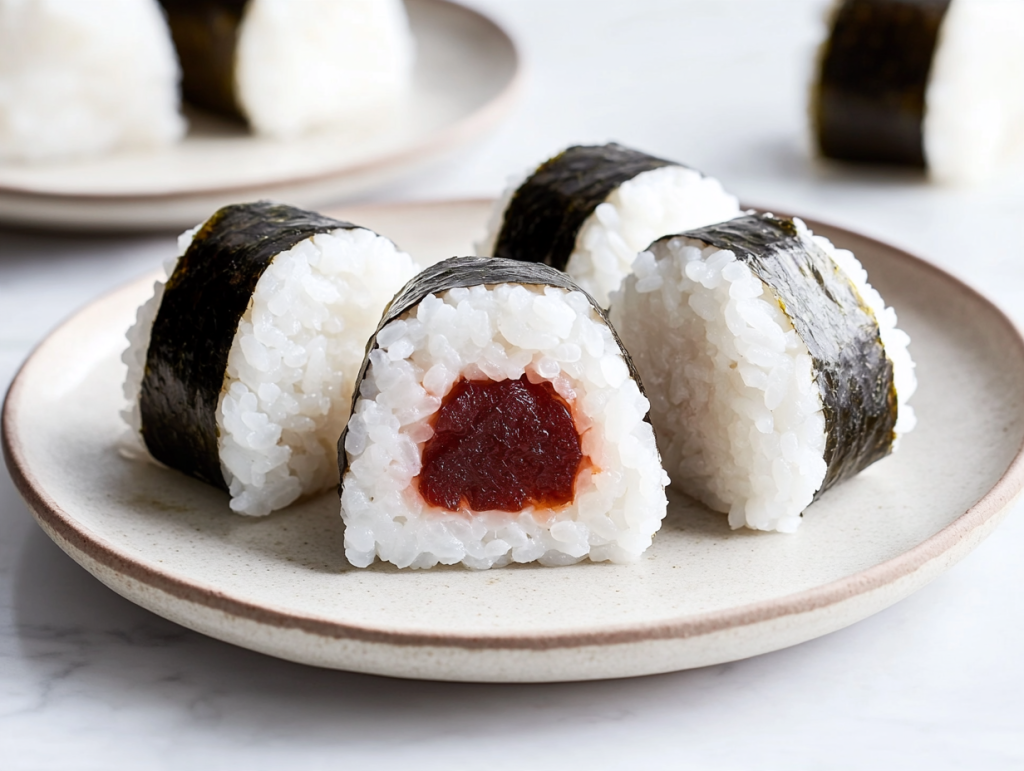
Umeboshi onigiri are traditional Japanese rice balls filled with umeboshi, a pickled Japanese plum known for its distinctive salty and sour flavor. Shaped by hand into triangles or rounded portions, these rice balls are a simple and convenient Japanese snack.
Short-grain Japanese rice provides a soft, slightly sticky texture that holds the filling together. The umeboshi adds a sharp, tangy contrast to the mild rice, while a sheet of nori provides a delicate, savory finish.
These vegan rice balls are ideal for lunchboxes, picnics, or a light snack between meals. They are easy to prepare with a few ingredients and can be enjoyed at room temperature or slightly chilled.
Servings: 4
Ingredients
- 2 cups Japanese short-grain rice
- 2 ½ cups water, or as directed on the rice package
- 4 umeboshi pickled Japanese plums, pitted
- 2 sheets nori, cut into strips
- ¼ teaspoon salt, or as needed
- Water, for moistening hands
Instructions
- Rinse the rice under cold running water, gently swirling it with your fingers, until the water runs mostly clear. Drain well.
- Add the rice and water to a rice cooker and cook according to the manufacturer’s instructions. Alternatively, cook in a covered saucepan according to the rice package directions until tender.
- Once cooked, let the rice rest covered for 10 minutes. Transfer it to a wide bowl and allow it to cool slightly until comfortable to handle while still warm.
- Remove the pits from the umeboshi and roughly chop the plums into small pieces. Divide the rice into eight equal portions and flatten each portion gently in your moistened palm.
- Place a small amount of umeboshi in the center of each rice portion. Fold the rice around the filling and shape it into a triangle or rounded ball, pressing gently enough to hold its shape. Sprinkle your hands with a little salt if desired.
- Wrap a strip of nori around each onigiri just before serving. Arrange the rice balls on a plate and serve fresh, or pack them in a clean container for a portable snack.
8. Inari Sushi with Carrots and Shiitake Mushrooms

Inari sushi with carrots and shiitake mushrooms is a Japanese rice dish made by filling sweet-savory tofu pockets with seasoned sushi rice and finely chopped vegetables. The soft tofu pouches contrast with the tender rice and earthy mushrooms, creating a balanced combination of textures and flavors.
Seasoned aburaage, or fried tofu pockets, provide a slightly sweet and savory outer layer. Shiitake mushrooms add an earthy taste, while carrots bring gentle sweetness and color. Rice vinegar gives the sushi rice a mild tang that complements the filling.
This vegan Japanese dish works well for lunchboxes, picnics, party platters, or a light meal. The tofu pockets can be prepared ahead of time, making assembly simple when it’s time to serve.
Servings: 4
Ingredients
- 2 cups Japanese short-grain rice
- 2 ½ cups water, or as directed on the rice package
- 8 prepared inari tofu pockets, drained
- ½ cup shiitake mushrooms, finely chopped
- 1 medium carrot, finely diced
- 1 teaspoon vegetable oil
- 2 tablespoons rice vinegar
- 1 tablespoon sugar
- ½ teaspoon salt
- 1 tablespoon soy sauce
- 2 tablespoons water
- 1 teaspoon toasted sesame seeds (optional)
Instructions
- Rinse the rice under cold water until the water runs mostly clear. Drain well, then cook with the water in a rice cooker or covered saucepan according to the package instructions.
- While the rice cooks, heat the vegetable oil in a skillet over medium heat. Add the diced carrot and chopped shiitake mushrooms and cook for 4–5 minutes until softened.
- Stir in the soy sauce and 2 tablespoons of water. Cook for another minute until most of the liquid has evaporated, then remove from the heat and let the vegetables cool slightly.
- In a small bowl, mix the rice vinegar, sugar, and salt until dissolved. Transfer the cooked rice to a wide bowl and gently fold in the vinegar mixture. Allow the rice to cool until warm, not hot.
- Fold the cooked carrot and mushroom mixture into the rice. Carefully open each inari tofu pocket and spoon the seasoned rice inside, filling each pocket without packing the rice too tightly.
- Arrange the inari sushi on a serving plate with the open sides facing up. Sprinkle with sesame seeds if desired and serve at room temperature.
9. Vegan Vegetable Tempura
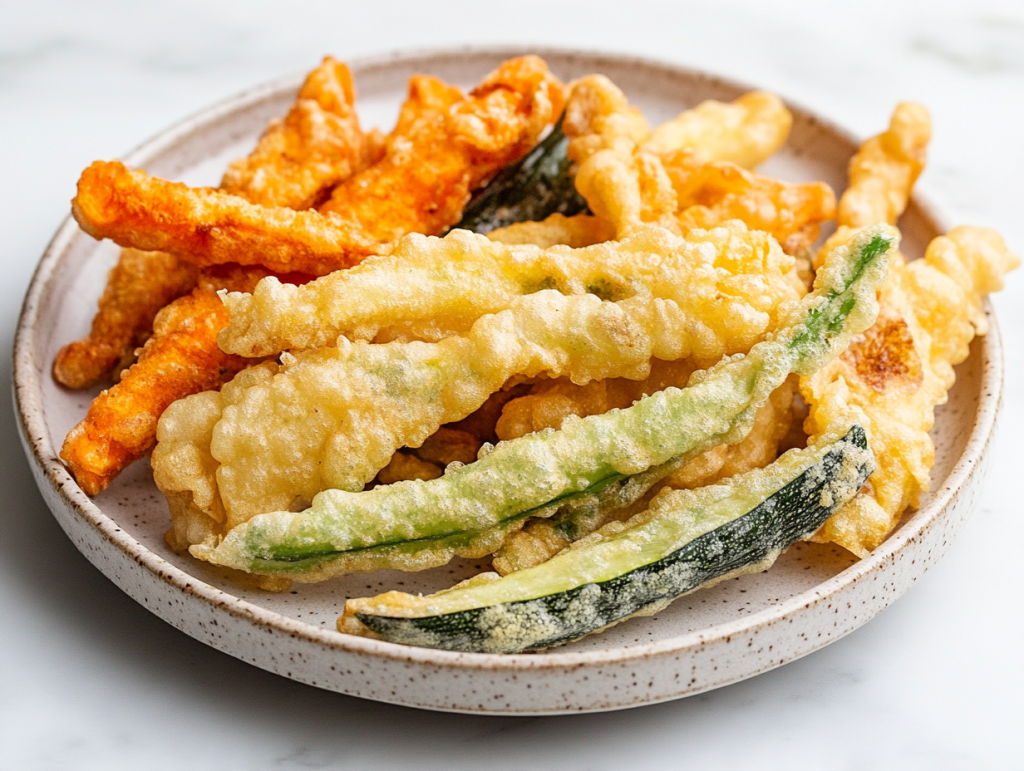
Vegan vegetable tempura is a Japanese-inspired dish featuring fresh vegetables coated in a light batter and fried until crisp and golden. The delicate coating adds crunch while allowing the natural flavor of each vegetable to shine through.
A simple batter made with flour, cornstarch, and ice-cold sparkling water creates a light, crisp texture without eggs or dairy. Sweet potatoes, zucchini, bell peppers, and broccoli work especially well because they cook quickly and offer a variety of colors and textures.
This vegetable tempura makes a tasty appetizer, snack, or side dish for a Japanese-inspired meal. Serve it immediately with a savory soy-based dipping sauce to enjoy the crisp coating at its best.
Servings: 4
Ingredients
For the Tempura
- 1 medium sweet potato, thinly sliced
- 1 small zucchini, cut into thin rounds
- 1 red bell pepper, cut into strips
- 1 cup broccoli florets
- ½ cup all-purpose flour, plus extra for dusting
- ¼ cup cornstarch
- ¾ cup ice-cold sparkling water
- ½ teaspoon salt
- Vegetable oil, for frying
For the Dipping Sauce
- ¼ cup soy sauce
- ¼ cup water
- 1 tablespoon mirin
- 1 teaspoon freshly grated ginger
Instructions
- Wash and dry the vegetables thoroughly. Slice the sweet potato and zucchini, cut the bell pepper into strips, and separate the broccoli into small florets.
- In a small saucepan, combine the soy sauce, water, mirin, and grated ginger. Warm over low heat for 2–3 minutes, then remove from the heat and set aside.
- In a mixing bowl, combine the flour, cornstarch, and salt. Pour in the ice-cold sparkling water and stir gently just until combined. A few small lumps are fine; avoid overmixing to keep the batter light.
- Heat about 2 inches of vegetable oil in a deep skillet to 350°F (175°C). Lightly dust the vegetables with flour, shaking off any excess, then dip them into the batter.
- Fry the battered vegetables in small batches for 2–4 minutes, turning as needed, until lightly golden and crisp. Avoid overcrowding the pan. Transfer the cooked vegetables to a wire rack to drain and maintain their crispness.
- Arrange the vegetable tempura on a serving plate and serve immediately with the warm or room-temperature dipping sauce. For the best texture, enjoy while freshly fried.
10. Japanese Sweet Red Bean Buns (Anman)
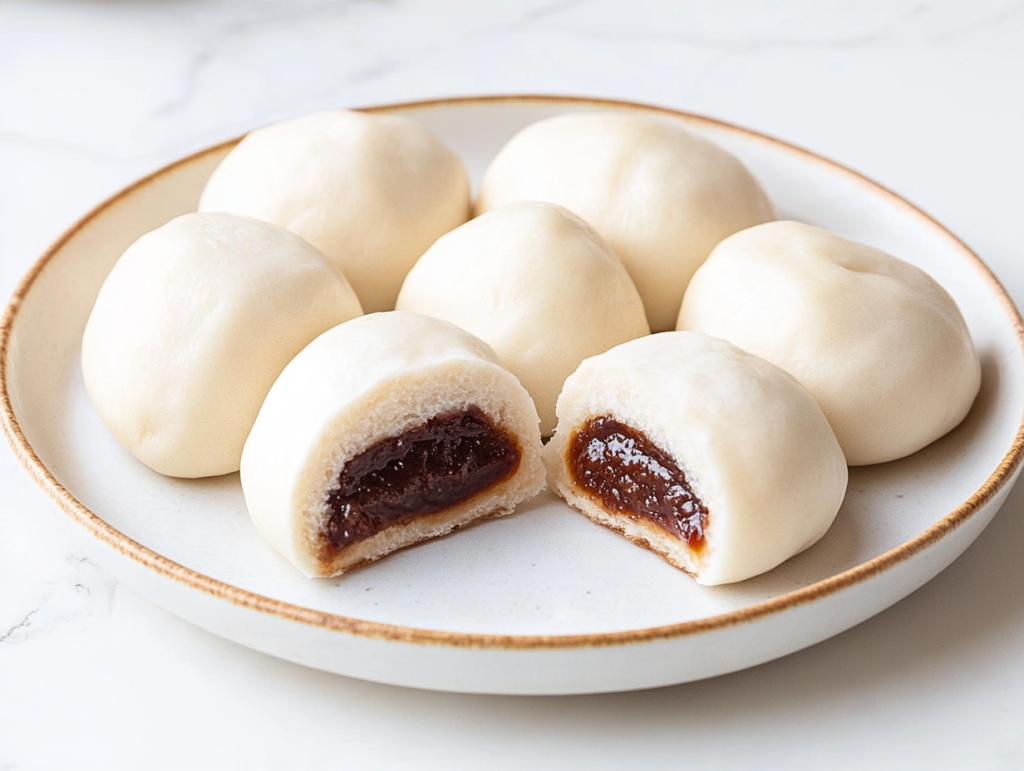
Japanese sweet red bean buns, known as anman, are soft, fluffy steamed buns filled with sweet red bean paste. Popular in Japanese bakeries, these comforting treats have a delicate dough exterior and a smooth, mildly sweet filling.
The dough is made with flour, sugar, yeast, and plant-based milk to create a tender texture without eggs or dairy. The filling traditionally uses anko, a sweet paste made from azuki beans, which gives the buns their distinctive earthy sweetness.
These vegan buns are perfect for an afternoon snack, a light dessert, or a sweet breakfast alongside green tea. They are best enjoyed warm, when the dough is soft and the red bean filling is tender.
Servings: 8 buns
Ingredients
For the Dough
- 2 cups all-purpose flour
- 2 tablespoons sugar
- 1 teaspoon instant yeast
- ½ teaspoon baking powder
- ¾ cup warm plant-based milk
- 1 tablespoon neutral vegetable oil
- ¼ teaspoon salt
For the Red Bean Filling
– 1 cup sweetened red bean paste (anko)
Instructions
- In a large bowl, combine the flour, sugar, instant yeast, baking powder, and salt. Add the warm plant-based milk and vegetable oil, then mix until a soft dough forms.
- Transfer the dough to a lightly floured surface and knead for 8–10 minutes until smooth and elastic. Place it in a lightly oiled bowl, cover, and let it rise in a warm place for about 1 hour, or until doubled in size.
- Gently punch down the dough and divide it into 8 equal portions. Roll each portion into a ball, then flatten it into a small circle with the edges slightly thinner than the center.
- Place about 2 tablespoons of sweet red bean paste in the center of each circle. Gather the edges over the filling and pinch firmly to seal. Place each bun seam-side down on a small square of parchment paper.
- Arrange the buns in a steamer, leaving space between them. Cover and let them rest for 15–20 minutes. Steam over gently boiling water for 12–15 minutes, keeping the lid closed during cooking.
- Turn off the heat and let the buns rest covered for 3 minutes before opening the lid to help prevent them from collapsing. Carefully remove the buns and serve warm.